


Atopic dermatitis in cats

Overview
Symptoms
Risk
Diagnosis
Vet treatment
Home treatment
Recommended Products
Prevention
When to worry

Atopic dermatitis in cats
In this article, we discuss atopic dermatitis, which is caused by a reaction to environmental allergens. Allergies can occur at any age, although symptoms often start when cats are young. Skin allergies in cats can cause ongoing itching and skin problems.
Atopic dermatitis is also known as feline atopic skin syndrome, atopy, environmental allergies or allergic skin disease. It is a long-term condition that usually needs ongoing management, but with the right treatment plan, cats can have a good quality of life.
What is atopic dermatitis in cats?
Environmental allergies in cats are complex and can be described using different terms:
Feline Atopic Syndrome is a broader term that includes environmental allergies, food allergies and asthma.
Feline Atopic Skin Syndrome is used for environmental allergies that affect the skin.
Food and flea allergies can cause similar signs to environmental allergies, and cats can have more than one type of allergy at the same time.
Atopic dermatitis is a skin disease caused by a reaction to allergens in the environment.
When a cat with atopic dermatitis is exposed to an allergen, their immune system can have an exaggerated response.
This response causes inflammation and itching, which is one of the main signs of atopic dermatitis.
Scratching, licking and chewing the skin can cause damage and increase the risk of secondary bacterial or yeast infections.
There is evidence that genetics can play a role in the development of atopic dermatitis in cats.
Some cats have seasonal flare-ups, depending on the allergens they are sensitive to.
Common environmental allergens include pollen, house dust mites, grasses and some plants. Exposure to cigarette smoke and other irritants may also worsen skin symptoms in some cats.
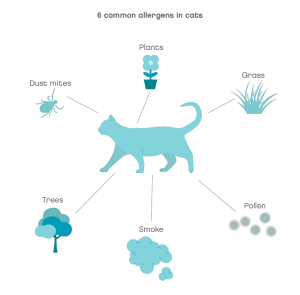
Atopic dermatitis cannot be cured, but it can usually be managed with an appropriate long-term treatment plan. Our Joii team is available 24 hours a day for advice.
Symptoms of atopic dermatitis in cats
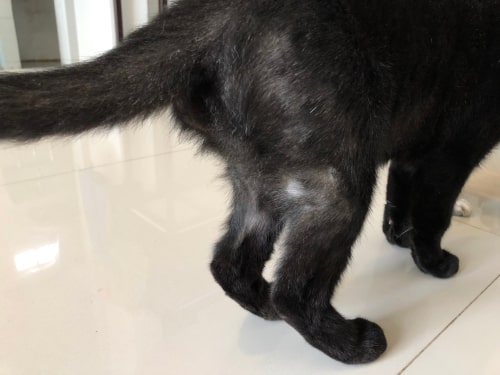
Itching is one of the common symptoms of atopic dermatitis in cats. It can be severe enough that cats excessively lick, scratch, or chew their skin, leading to significant trauma of the skin. The signs can appear anywhere on the body but are most common on the feet, face or muzzle, ears, armpits, and groin.
It may not always be obvious that your cat is itchy, as some cats will secretly overgroom when you are not watching. You may notice areas of hair thinning or hair loss if this happens.
Other signs include:
Red, inflamed skin
Skin lesions, such as red spots, rashes, crusts, or scabs
Thickened or darkened areas of skin
Miliary dermatitis: small, crusted lesions that can feel like tiny scabs or bumps under the fur.
Eosinophilic granuloma complex: this can cause different types of skin lesions, including flat, red and very itchy patches, raised or thickened areas of skin, and ulcers. These may occur on the tummy, paws, mouth or lips.
Recurrent skin and ear infections may indicate an underlying allergy. Repeat anal gland problems can also be associated with allergies.

Are some cats more at risk of atopic dermatitis than others?
Any cat, regardless of breed, sex or age, can develop allergies. However, some factors may increase the likelihood of developing atopic dermatitis, including:
Genetics: There may be a genetic component to atopic dermatitis.
Breed: Some breeds, including Abyssinians, Maine Coons, Persians, Himalayans and Devon Rex, may be more prone to developing allergic skin disease.
Age: Atopic dermatitis often starts in younger cats, although cats of any age can develop the condition.
Is my family at risk of catching skin allergies?
No. Atopic dermatitis in cats is not contagious. It cannot pass from your cat to people or other pets in the household.
How is atopic dermatitis diagnosed in cats?
Environmental allergies in cats can be complex to diagnose. Because the symptoms can be similar to those of many other conditions, your vet will usually work through a series of tests. Atopic dermatitis is diagnosed by ruling out other common causes of itching, rather than by a single test.
A thorough examination is an important first step. Your vet will look at your cat's skin, ears and other affected areas and assess how severe the signs are.
1. Checking for parasites and skin infections
Your vet may recommend tests to look for other common causes of itching and skin problems, including:
Skin scrapes to look for mites such as Demodex and, where appropriate, other parasites.
A flea comb or other tests to look for fleas or flea dirt. Fleas may not always be found because cats can groom them away.
Skin swabs or samples to check for secondary bacterial or yeast infections.
Hair plucks or other skin samples may also be recommended in some cases.
A skin biopsy may be advised if the diagnosis remains unclear or your vet needs more information about the skin changes.
2. Food trial
Once parasites and other common causes have been investigated, your vet may recommend a food trial to investigate whether your cat has a food reaction.
A hydrolysed or appropriate novel-protein diet is fed exclusively for a set period. Hydrolysed diets contain proteins that have been broken down into smaller pieces, so they are less likely to trigger an immune response.
3. Allergy testing
Blood or skin allergy tests may sometimes be used to identify environmental allergens. These tests don't diagnose atopic dermatitis on their own. They may be considered when your vet is investigating whether allergen-specific immunotherapy could be suitable for your cat.
4. Checking the ears
Itchy and inflamed ears can be a sign of allergies in cats, especially if the symptoms return frequently. Allergies can also increase the risk of ear infections. Your vet may examine the ear canals using an otoscope and take swabs to look for bacteria, yeast or other causes of inflammation.
5. Blood and urine tests
Blood or urine tests may be recommended if your vet suspects an underlying condition or wants to rule out other causes of your cat's signs. The tests used will depend on your cat's age, symptoms and examination findings.
What’s the treatment for atopic dermatitis in cats?
Treatment for atopic dermatitis usually involves a multi-modal approach to control itching, inflammation and any secondary skin problems. Your vet will work with you to find the combination of treatments that works best for your cat. Treatment may need to be adjusted over time depending on how your cat responds.
Anti-itch and anti-inflammatory medication
Your vet may prescribe medication to reduce itching and inflammation. Options may include:
Topical treatments: Medicated sprays, creams or other topical treatments containing corticosteroids may be used for localised areas of inflammation. These can be useful for some cats but may be difficult to apply regularly.
Oral corticosteroids: Steroids such as prednisolone can be effective at reducing itching and inflammation. These may recommended for short-term control or flare-ups. Longer-term or repeated use may increase the risk of side effects, so your vet will aim to use the lowest effective dose for the shortest appropriate time.
Ciclosporin: An immunosuppressive medication that can be used for long-term management of allergic skin disease in some cats. It can take several weeks to reach its full effect, so another treatment may be needed initially to control severe itching.
Allergen-specific immunotherapy
Allergen-specific immunotherapy may be considered for some cats. This involves gradually exposing the cat to small amounts of the allergens they are sensitive to. Treatment is usually given by injection. It can take several months before the full effect is seen.
Treatment of secondary skin infections
Cats with allergic skin disease may develop secondary bacterial or yeast infections, which may make their itching worse. Treatment may include:
Depending on the type and severity of the infection, treatment may include medicated shampoos, wipes, creams or other topical treatments.
Oral medication may be needed for severe or widespread infections.
Antibiotics or antifungal medication may be prescribed when appropriate.
Appropriate parasite control, particularly flea control, is an important part of managing allergic skin disease.
Ear infections
Treatment may include:
Ear cleaners to remove excess wax and debris where appropriate.
Medicated ear drops containing anti-inflammatory, antibacterial or antifungal ingredients, depending on the cause of the ear problem.
How to look after a cat with atopic dermatitis at home
Unfortunately, cat allergies can be tricky to manage, and it's recommended to take a multi-modal approach. This means using different strategies to help control the symptoms.
Alongside treatments recommended by your vet, ongoing care at home can help reduce flare-ups and keep your cat comfortable.
At-home recommendations:
Keep your cat up to date with appropriate parasite control. Speak to your vet about what parasite control to use and how often, as it depends on your cat's lifestyle and age.
Feed a good quality, complete and balanced diet. If your vet suspects a food allergy, they may recommend a specific elimination diet.
If your cat is diagnosed with a specific environmental allergy, try to reduce their exposure where possible. For example, keep them indoors when pollen levels are high, vacuum and dust regularly, avoid fragranced or dusty litter, and do not smoke around your cat.
Skin supplements containing omega-3 fatty acids may help support the skin barrier in some cats.
Temporary use of a protective collar may be recommended by your vet to help prevent scratching, licking or chewing from causing further skin damage.
Calming or medicated shampoos, mousses, wipes or gels may be useful for some cats. Some products can help soothe irritated skin or manage certain mild skin infections.
Regular ear cleaning may be advised if your cat is prone to ear problems. However, only use an ear cleaner recommended by your vet, as some products may be unsuitable when the ear is inflamed or damaged.
Regularly wash your cat's bedding and clean areas where they spend a lot of time to help reduce the build-up of allergens and irritants.
Avoid using human creams, shampoos or other home remedies unless your vet has specifically recommended them, as some products can irritate your cat's skin or may be harmful if licked.
Recommended Products


Tips on how to prevent atopic dermatitis in cats
Unfortunately, skin allergies are not usually preventable, but the following steps can help reduce exposure to potential triggers and manage the severity of symptoms:
Keep all of your household pets up to date with parasite prevention, especially flea treatment.
Regularly clean your cat's bedding, litter tray, collar and food and water bowls.
Dust and vacuum the house regularly, and avoid sprays, perfumes and other fragranced products around your cat.
Brush your cat and check their skin regularly for any unusual areas, such as redness, scabs, sores or hair loss.
Feed your cat a good quality, complete and balanced diet that is appropriate for their age and lifestyle. Some cats may benefit from diets or supplements containing omega-3 fatty acids to support skin health.
Some cats may benefit from regular bathing, medicated shampoos or ear cleaning. Follow your vet's advice on which products to use and how often, as bathing or cleaning too frequently can irritate the skin or ears.
Have your cat checked by a vet if they become itchy. Early treatment can help reduce scratching, licking and chewing and may help prevent further damage to the skin.
When you should be worried about atopic dermatitis in cats
Book an urgent vet visit if:
Your cat is constantly itching, scratching, licking or chewing their skin, or seems to be in pain.
Your cat has severe or worsening skin problems, particularly if the skin is very red, swollen, bleeding, sore or oozing.
Your cat's skin problems are affecting their appetite or general wellbeing.
Speak to one of our Joii vets if:
You want advice on how to carry out a food trial.
You want to know whether skin supplements may be helpful for your itchy cat.
You have questions about parasite control for your cat.
Your cat has recurring itching or skin problems and you want advice on managing them at home.
You have questions about your cat's ongoing treatment or how to reduce flare-ups.


