


Pet Travel Made Easy: Your 5-Step Guide to EU Travel

Step 1: Get your pet microchipped
Step 2: Rabies vaccination
Step 3: Get an Animal Health Certificate (AHC)
Step 4: Tapeworm treatment (dogs only, for return to the UK)
Step 5: Travelling with your pet
Remember!
Checklist for travelling to the EU with pets
Keeping your travelling pet safe and well

Pet Travel Made Easy: Your 5-Step Guide to EU Travel
International pet travel needs careful preparation. This Article from Joii guides you through the process, step-by-step, to ensure the whole family enjoys a smooth and stress-free trip.
Step 1: Get your pet microchipped
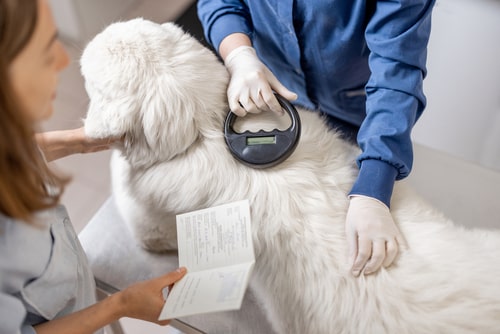
Microchipping is a means of identifying your pet and returning them to you, wherever you or they may find themselves. All UK dogs and cats, whether travelling or not, must have a microchip.
Your pet must be microchipped before anything else.
The microchip must be locatable and readable.
The chip should meet ISO standards (ISO 11784/11785).
The microchip matches your pet to their official travel documents.
Step 2: Rabies vaccination
Your pet must be vaccinated against rabies after being microchipped. Rabies is a lethal disease, affecting humans and animals, and is usually spread by the bites of infected dogs or foxes. We don’t have rabies in the UK, but it’s present in Europe and many long-haul destinations.
Pets must be at least 12 weeks old to receive the vaccine.
The vaccine must be a UK-approved variety.
Pets cannot travel until their first rabies vaccine or an overdue booster vaccination takes full effect. This is at least 21 days, but may be longer, depending on the manufacturer’s guidelines.
If vaccination boosters are kept up-to-date, according to manufacturer and/or travel destination rules, there is no requirement for such a delay.
Step 3: Get an Animal Health Certificate (AHC)
All dogs, cats, and ferrets travelling from GB to the EU must have a valid AHC. It’s a document issued by an authorised vet that proves your pet meets the rules for travel to the EU. This includes rabies vaccination status and health requirements. It replaced UK pet passports after Brexit in January 2021.
From 22 April 2026, pet owners in Great Britain (England, Scotland, Wales) will no longer be able to use any existing pet passports for travel to the EU. Even if your pet’s passport was issued in the EU, it won’t be valid now. You will need an Animal Health Certificate.
If you live in Northern Ireland your pet’s existing passport is still valid for travel, as long as it was issued in the EU. Otherwise NI residents will also need to apply for an AHC.
About the AHC:
You need to get a new AHC from a UK vet within 10 days of travel.
The issuing vet must be an Official Veterinarian (OV). An OV is a private vet who carries out work for the UK Government. Not all vets are OVs, so check with your practice well in advance. If they don’t have an OV, they may be able to help you find one.
Book the appointment for your AHC well in advance. Some vets have long waiting lists.
The AHC is valid for:
Entry into the EU for 10 days.
Travel within the EU for 4 months.
Re-entry to the UK for 4 months.
You need a new AHC for each trip to the EU.
Up to 5 pets can be added to one AHC. You cannot take more than 5 pets to an EU country, unless it’s for an event or to train for an event (show, competition, sporting). You’ll need written proof of registration for this.
Step 4: Tapeworm treatment (dogs only, for return to the UK)
Worming is required to keep the UK free of a tapeworm called Echinococcus. This parasite can infect humans and cause life-threatening illness.
Before returning to the UK, dogs must be treated for tapeworm (Echinococcus multilocularis) with an approved and effective worming product. Treatment must be given between 1 and 5 days (24–120 hours) before re-entry.
A vet in the EU must record it in the AHC.
Tapeworm treatment is not required to return from Ireland, Finland, Norway, or Malta.
Step 5: Travelling with your pet
Travelling to the EU
You must enter the EU through a Designated Traveller’s Point of Entry, an official place, like an airport or ferry terminal, where travellers and their pets are allowed to enter the country. It’s where pet documents and health checks can be carried out if needed.
Bring the following:
Animal Health Certificate (AHC)
Rabies vaccination record
Proof of microchipping
Tapeworm treatment documentation (For dogs returning to the UK)
Returning to the UK
You can return using your valid AHC (if within 4 months)
Your pet may be checked at the UK border
Travelling to and from Northern Ireland
If you live in Northern Ireland:
You don’t need any new paperwork to take your pet from NI to Great Britain.
Just make sure your pet is microchipped.
If you're travelling from Great Britain to Northern Ireland:
From 4 June 2025, you’ll need a free Northern Ireland Pet Travel Document (PTD).
The PTD lasts for your pet’s lifetime.
No vet visit is required to apply.
Your pet must be microchipped.
PTD and microchip will be checked at the port or airport.
You only need an Animal Health Certificate if travelling onward to Ireland or the EU.
You can’t take more than 5 pets to Northern Ireland unless it’s for an event or training for one.
Remember!
Always check the pet entry requirements of your destination well before you travel.
Some European countries require yearly rabies vaccines.
Plan for any onward travel. If entering Malta, Finland, or Ireland from a European country, tapeworm treatment regulations apply as for UK entry.
Checklist for travelling to the EU with pets
Microchip:
Required for all pets
Valid for life
Rabies vaccination:
Required for all pets
Must be given after microchipping
Wait at least 21 days before travel (actual duration required depends on manufacturer’s guidelines)
Lasts up to 3 years however vaccine validity may vary by product and destination country
Animal Health Certificate (AHC):
Required for all pets (NI residents holding EU-issued pet passports may continue to use these passports)
Must be issued within 10 days of travel
Valid for: Entry to the EU (10 days); Travel within the EU and UK return (up to 4 months)
Tapeworm treatment:
Dogs only, most EU countries
Needed 24–120 hours before returning to the UK
UK Pet passports that were previously used for travel to and from Europe are not valid since Brexit and are no longer issued. They are still used in other EU countries and are valid if issued there.
Keeping your travelling pet safe and well
Key ways to keep your pet safe, healthy, and comfortable when travelling overseas:
Visit your vet before travel: Make sure your pet is healthy and travel-ready. Ask your vet about extra vaccines or parasite protection needed for your destination.
Parasite prevention matters: Your pet needs more than just paperwork to stay safe. Use effective protection against fleas, ticks, mosquitoes, and sandflies. These pests in Europe can spread serious diseases like Babesiosis, Leishmaniasis, Ehrlichiosis, and Heartworm. Continue treatment for at least 1–2 months after you return.
Plan pet-friendly travel: Choose transport and accommodation that welcome pets and have proper facilities.
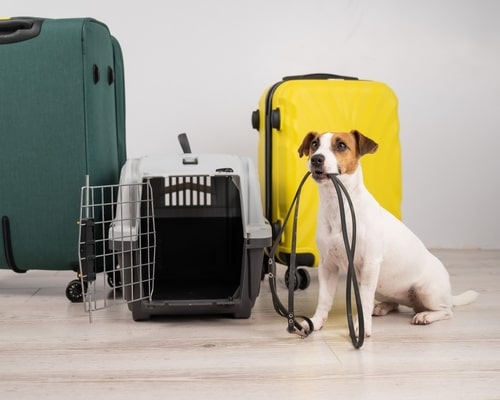
Use a secure carrier or crate: Make sure your pet can stand, turn, and lie down comfortably. Label the crate or carrier clearly with your contact details
Pack a pet travel kit: Include food, water, bowls, poo bags, a lead, any medication and familiar items like a favourite blanket or toy.
Avoid extreme temperatures: Travel in cooler parts of the day and never leave pets in parked cars.
Keep routines as normal as possible: Stick to regular feeding and exercise schedules to help reduce stress.
Check for local hazards: Research local risks like diseases, toxic plants, dangerous animals, or local rules, for example, when to keep your dog on a lead, any breed bans.
Make sure ID is up to date: Your pet’s microchip and ID tag should include your current contact details, including a number reachable while abroad.

If you’d like to learn more, you can find detailed guidance on the official UK Government website.

