


Dental problems in cats

Overview
Symptoms
Risks
Diagnosis
Vet treatment
Home treatment
Prevention
When to worry
Dental problems in cats
Dental problems are common and painful health concerns in cats. Around 80% of cats over 4 years old have dental disease. Although it can affect any age, sex or breed, it’s most common in older cats, certain breeds and in cats with other illnesses.
Dental problems can start even before birth and continue to develop throughout your cat's life. 1 in 4 of the cats who have to visit a vet do so because of dental disease. Common problems include inflamed sore gums, eroded teeth and tartar (scale, calculus). Untreated dental disease causes pain and suffering for many cats. A healthy diet, daily dental care and regular check-ups will help your cat have a healthy mouth and a better quality of life.
What are dental problems in cats?
Cats are born without teeth; their baby teeth come in between 3 and 6 weeks old.
Baby teeth fall out as adult teeth come in. Adult teeth are all present by 6-7 months old.
Cats have 26 baby teeth and 30 adult teeth.

Cats get 3 main types of dental problems
1. Stomatitis - Disease of the gums, tongue and cheek
2. Periodontal disease - Disease of the tissues that hold the tooth in place
3. Feline tooth resorption or FORLS - Tooth roots and then tooth crowns are actively destroyed by the body's own cells. It's a progressive illness that affects between 20 and 75% of adult UK cats.
Other, less common problems include:
Broken teeth from trauma, such as a road accident, a fall, or a blow to the face
Overcrowding: having too short a face for all the teeth
Malocclusion: poor alignment of teeth (from birth)
Dental abscesses
Tooth decay in cats
Cats don't eat sugar and sweets the way humans do, so they aren't prone to the cavities (caries) and decay that this causes in humans. However, tooth decay is still a problem in cats and can result from any (or all) of the following:
Bacteria from rotting food particles trapped between teeth
Poor diet and poor dental care
Tooth root abscesses
Gingivitis: often a disease in itself, but also worsens tooth decay
Other illnesses, such as Chronic kidney disease, and cancer of the gums or jaw
The process of tooth decay in cats:
Bacteria in the mouth grow on the surface of the tooth.
A sticky, invisible layer called plaque forms. Poor diet and poor dental care will worsen plaque formation.
Tartar, also called dental calculus or scale, forms when plaque hardens on the tooth.
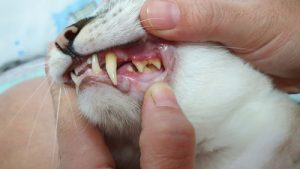
Dental tartar/scale is a hard, yellow to brown material. Tartar has a rough surface and attracts bacteria.
-
Tartar worsens tooth decay by:
Attracting more bacteria and helping them stick to the tooth.
Wearing away gum, which exposes tooth roots, eventually weakening the teeth.
Acid produced by the bacteria and plaque attacks teeth. When plaque and bacteria get onto the gums, it makes them red and inflamed. This is called gingivitis.
Gingivitis is the first warning sign of decay affecting the gums and other structures which support and anchor the tooth. This is leads to periodontal disease.

How to tell if your cat has dental problems
Symptoms of dental problems will relate to pain, difficulty biting or chewing food and decay. This includes:
Dropping food, eating on one side of the mouth
Eating soft food and leaving kibble
Dribbling saliva, bleeding from the mouth
Halitosis (smelly breath)
Rubbing/pawing at the mouth
Losing weight
Unkempt coat from reduced grooming
Becoming quiet and withdrawn
Cats rarely show obvious symptoms of pain. This doesn't mean they don't feel it. Cats are prey animals as well as hunters. They don't want to look like a victim, so they hide pain well and ‘suffer in silence’. But many cat owners report that their cats have much happier and friendlier personalities after dental surgery. This confirms that the disease has indeed been painful for them.
What are the risks of dental problems in cats?
Various life stages, breed and health factors affect your cat's risk of having dental problems. These include:
Increasing age
Eating a poor diet
Retaining temporary (baby, milk or deciduous) teeth: most common in brachycephalic breeds
Having certain illnesses including FIV, FeLV, and Feline Calicivirus
Being a brachycephalic (short-faced) breed, suffering from dental overcrowding and poor tooth alignment
Complications of dental problems in cats
Undiagnosed and untreated dental disease can lead to other serious and life-threatening illnesses. This happens when bacteria from the affected teeth and gums spread through the blood or airways to other parts of the body.
Potential illnesses include:
Chest infections and bronchopneumonia
Septicaemia
Kidney disease
Damaged heart valves and muscle (bacterial endocarditis)
Above all, dental disease causes reduced quality of life for cats
How do vets diagnose dental problems in cats?
Dental problems are often picked up during visits. Examination may reveal problems such as missing teeth, inflamed gums, tooth staining or retained baby teeth.

It’s often difficult to assess your cat's mouth when they’re awake. Your vet may advise a general anaesthetic to carefully examine your cat's teeth, gums and tongue.
Further tests include:
Dental x-rays - often essential to examine the roots of teeth and the jawbone where they’re anchored
What’s the treatment for dental problems in cats?
Vet treatment for dental problems depends on the problem and the severity. Treatment possibilities include extractions, removing all the hard calculus where bacteria are gathered, and cleaning the teeth and gums thoroughly to give the mouth a ‘fresh start’.
Cleaning teeth using an ultrasonic scaler and handheld dental tools to remove lumps of scale
Removing loose, broken or rotten teeth
Removing teeth with defects due to resorption
Removing tooth roots where the crown is missing and the gum is inflamed
More specialist techniques may be recommended
Treatment for birth defects and misaligned teeth:
For brachycephalic breeds, misaligned and crowded teeth are such a feature of the breed shape that potential problems can't be ‘cured’ or prevented as a kitten. Some degree of dental disease is inevitable.
For cats with an individual overbite or misplaced canine teeth, options include:
Removing teeth that damage gums or other teeth. The tooth removed may be otherwise healthy.
Flattening the crowns (tips) of teeth to reduce gum injury.
Specialist orthodontic care.
Home care for cats with dental problems
There are no home remedies to correct problems with tooth alignment. Any procedures suggested online, in chat forums or elsewhere are unethical and dangerous to your cat. Chipping of calculus by hand can also lead to emergency problems with broken teeth and bleeding.
If your cat has dental problems, they should see their vet for a full examination. Your vet will be able to advise on treatment that is safe and in your cat’s best interests.
Call your vet for the next available appointment
Feed smaller, more frequent meals of soft food
Encourage your cat to drink as much as possible, even if they refuse food
Keep your cat's teeth clean after a dental operation. Start brushing immediately to prevent plaque and bacteria from returning. This can happen within 24 hours.

Tips for preventing dental problems in cats
Pet owners have the biggest influence on their cat’s dental health. The risks of dental decay in later life can be dramatically reduced if you start cleaning your cat’s teeth while they’re still a kitten, but it’s never too late to start brushing your cat’s teeth.
Other effective preventive measures include:
Feed a healthy diet. A special dental care diet, such as Hills t/d, is ideal. Its ingredients and kibble size are proven to reduce plaque, stain and tartar build-up - and effectively clean at the gum margin.
Alternatives where brushing isn’t tolerated include dental rinses, gels, sprays and water additives.
Dental chews and treats encourage the chewing and tongue action, which helps to remove plaque and calculus from teeth. Check that chew toys are not too hard for your cat’s mouth and are free of dangerous chemicals. Always check the feeding instructions or ask your vet for advice.
The Veterinary Oral Health Council awards a seal of approval to dental products which effectively slow down plaque and tartar formation. This includes diets, toothpastes, sprays, washes, food additives, chews and treats.

Protecting future generations
Living with dental problems is challenging and painful. Certain dental problems are inherited. Fewer kittens and cats will have these dental problems if we avoid breeding from cats with dental problems. This includes breeding cats with faces too short to hold the teeth.


When to worry about dental problems in cats
Call a vet if your cat:
Has facial swelling and poor appetite
Has unexplained bleeding from their mouth
Is physically unable to pick up food or chew
Is distressed, pawing at their face and unable to settle
Joii can help with advice on:
Recognising the symptoms of dental disease
Brushing your cat's teeth
Alternatives to brushing
Choosing age-appropriate chew toys and diets


