


Patella luxation in dogs

Overview
Symptoms
Risk
Diagnosis
Vet treatment
Home treatment
Prevention
When to worry

Patella luxation in dogs
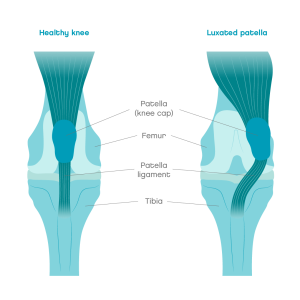
Patellar luxation, commonly known as a 'slipped kneecap,' is a common orthopaedic condition in dogs. It occurs when the patella (kneecap) shifts out of its natural track, a channel at the end of the thigh bone called the trochlear groove, as the knee moves.
Small and toy breeds are more predisposed to patella luxation, but it can affect dogs of any size or breed. Owners often first notice it as a brief, intermittent 'skip' or 'hop' when their dog is walking. Because this misalignment can lead to wear and tear on the joint, most affected dogs will develop some degree of arthritis later in life. Management depends on the severity of the luxation. Options range from weight management and lifestyle modifications to corrective surgery designed to stabilise the joint and ensure long-term comfort.
What is patella luxation in dogs?
The kneecap (patella) normally sits in a deep v-shaped notch at the base of the thigh bone called the trochlear groove. This groove acts as a guide, keeping the patella stable as the leg bends and straightens. A healthy patella should never slide or pop out of the femoral grove.
In dogs with patellar luxation, the kneecap exits this channel. This is often because the groove is too shallow to hold the patella in place or because the muscles and tendons pulling on the kneecap are slightly misaligned.
Approximately 50% of affected dogs have both knees involved.
For dogs that require surgery, outcomes are better if surgery is performed before advanced arthritis develops or additional ligament injury occurs, such as cruciate ligament disease.
Causes of patella luxation in dogs
Several factors may contribute to its occurrence, such as:
Joint or leg structure changes that are inherited (hereditary).
Growth related changes in the joint or leg (developmental abnormalities).
Traumatic injury.
Symptoms of patella luxation in dogs
Symptoms vary greatly with the severity of the disease:
Can be an incidental finding detected by your vet on a routine physical examination.
Your dog may suddenly carry the leg up for a few steps (skipping).
They can shake or extend the leg while walking or running.
In young puppies with severe medial patellar luxation, the rear legs often have a “bow-legged” appearance that worsens with growth.
Large breed dogs may have a “knocked-in knee” appearance.
Are some dogs more at risk of patella luxation than others?
Small breed dogs, such as Boston and Yorkshire Terriers, Bichon Frise, Chihuahuas, Pomeranians, and Miniature Poodles are more prone.
But it can also occur in large breeds, where Chinese Shar Peis, Flat-Coated Retrievers, Akitas, and Great Pyrenees are more likely to have it.
Common coexisting conditions
In addition to patella dislocation, the following conditions can occur:
Arthritis: the knee cap may dislocate more often over time, damaging cartilage and eventually exposing the bone, causing arthritis and pain.
Cranial cruciate ligament disease: ligaments in the knee may become strained, ultimately leading to rupture of the cranial cruciate ligament.
Tendinitis: inflammation of knee ligaments.
Limb deformities: in puppies, the abnormal position of the patella may also lead to serious bone deformation of the leg.
How is patella luxation diagnosed?
Diagnosis begins with a specialised orthopaedic assessment, where your vet will gently feel the knee to determine the stability of the kneecap. Based on how easily the patella moves out of its groove, they will assign a 'grade' from 1 to 4.
Grade 1: The patella can slip out of place with manipulation but can easily be placed back in position. This grade doesn’t usually cause much of a problem.
Grade 2: The patella will occasionally slip out of place during your dog’s normal movement but can easily be placed back in position.
Grade 3: The patella is out of place most of the time but can be moved back into normal position.
Grade 4: The patella is out of place and cannot be moved back into normal position.
Radiographs (x-rays) may be necessary to assess your dog's condition and rule out other problems. Sometimes, CT scans are also necessary.
Vet treatment for dogs with patella luxation
Your vet might recommend medical treatment and/or surgery based on your dog’s needs.
Medical management
Medication to control inflammation and pain.
Joint supplements and other arthritis management medications.
Diet and exercise management: Weight control will also help to reduce pain.
Additional treatments, such as physiotherapy, acupuncture, massage, stem cell therapy, and laser therapy, can be beneficial.
Our arthritis article offers more information about joint supplements and how to find qualified professionals to help you.
Surgical treatment
Surgery may be recommended for chronic pain or a grade 3 or 4 luxating patella. In some cases, dogs with grade 2 luxations may also benefit from surgery. Referral to a specialist vet is usually necessary.
-
The vet may recommend the following surgeries:
Tibial tuberosity transposition: a surgery that repositions the attachment of the patella ligament to help it in the correct place.
Trochlear block recession: a procedure that deepens the groove in the thigh bone so the patella sits more securely and is less likely to slip out.
Soft tissue reconstruction: tightening or adjusting the surrounding ligaments and tissues to better support and stabilise the patella.
Distal femoral varus osteotomy: a surgical procedure where the lower part of the thigh bone is cut and realigned to correct bone deformity and improve joint alignment in the limb.
Home management of a dog with patella luxation
Follow your vet’s recommendations and exercise restriction plan carefully to reduce the risk of complications:
After surgery:
Keep your dog rested by using a cage or leaving them in small rooms of the house with no access to high furniture (sofa or bed).
Keep their minds busy by feeding them in slow feeders and using puzzle toys.
Start physiotherapy as soon as possible and continue for the following 3-6 months. The sessions will change as the bone heals and the main goal changes.
All dogs with patella luxation:
A healthy weight is essential. Check your dog's body condition score. Vet nurses can help with advice on weight loss.
Provide ramps, anti-slip mats and follow your vets long-term exercise recommendations.
Your vet may advise joint supplements and a prescription diet.
Keep a mobility diary and attend regular vet checks.
Will your dog be able to exercise normally after patellar luxation surgery?
Your dog should be able to exercise normally after a re-evaluation with your orthopaedic surgeon and physiotherapy. It takes at least 6-8 weeks.
What to expect when your dog has patella luxation?
Grade 1: Don’t often show symptoms or require treatment. However, they should be monitored to make sure their symptoms don't get worse.
Grade 2: When managed carefully with the correct treatment, they often do extremely well and are able to live a happy, pain-free life.
Grades 3-4: Do well if they have corrective surgery. Unfortunately, without surgery, dogs with high-grade patella luxation tend to suffer from mobility problems and pain throughout their lives.
It’s important to be aware that even with treatment, many dogs with patella luxation develop arthritis in their knees later in life.
How to prevent patella luxation
It’s not always possible to prevent this disease. Due to its inherited cause, we can avoid passing it on to future generations by not breeding dogs that have been diagnosed with patella luxation.
When should you be worried about your dog with patella luxation?
If your dog was diagnosed with patella luxation, contact your local vet practice if they:
Do not improve despite treatment
Keep limping, hopping, or walking abnormally
Struggle to run, jump, or use the stairs
Have vomiting, diarrhoea, or loss of appetite when medication has been prescribed
Joii can help:
If your dog had surgery and you need tips to keep them calm and rested at home
If you need help and advice on slowing the progression of arthritis


