


Sprains and strains in cats

Overview
Symptoms
Risk
Diagnosis
Vet treatment
Home treatment
Prevention
When to worry

Sprains and strains in cats
Sprains and strains in cats are one-off injuries to tissues like ligaments, tendons and muscles in their body. These types of injuries cause pain, resulting in a limp or a change in their walking pattern.
Just like in people, sprains and strains are most commonly caused by slips and falls, overuse, or overstretching. Sprains and strains are also called soft tissue injuries. If, after resting, your cat does not improve the next day, you should take them to be checked by a vet.
What are sprains and strains in cats?
Sprains and strains are injuries caused to the soft tissues of a cat’s joints or limbs.
A sprain refers to an injury to a ligament. The band of tissue that supports the joint and connects bone to bone.
A strain refers to an injury to the muscle and/or tendon. A tendon is a strong cord of tissue that attaches muscle to the bones.
Common locations for these types of injuries include:
Wrist (carpus)
Elbow
Shoulder
Hip
Knee
Hock (tarsus)
Symptoms of sprains and strains in cats
You might notice some or all of the following symptoms:
Sudden limp
Not bearing weight on the affected leg
A painful leg: they can react when the leg is touched and even bite or scratch
Stiffness when walking
Reluctance to exercise or difficulty getting up, jumping and using the stairs
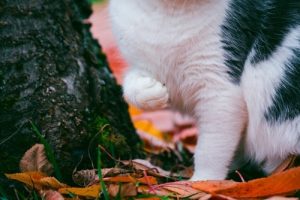
Cats tend to hide when they are in pain. Not all limping or leg injuries are obvious. Some are more subtle than others.
Check for other signs of mobility problems:
Stiffness or shuffling gait
Difficulty jumping
Swelling and heat in the leg
Increased grooming on the affected leg
Weakness
Change in mood or behaviour (e.g. hiding/sleeping in a new spot)
Grooming less
Pooing or weeing outside the litter tray
Are some cats more at risk of sprains and strains?
Sprains and strains are injuries that can affect any cat, regardless of age or breed. Although certain groups can be more at risk, such as:
Outdoor cats or highly exercised cats who suddenly jump or turn as they run.
Older age, as the ligaments start to weaken.
Obese cats can damage their ligaments due to the excess strain on the joints.
Check your cat’s body score condition (BSC) to see if they are overweight.
How do vets diagnose sprains and strains in cats?
Sprains or strains are diagnosed by your vet using a combination of:
Assessing the way your cat walks
Hands-on examination, including an orthopaedic exam
Your vet might recommend:
Radiographs (X-rays)
Advanced imaging, such as MRI
Vet treatment for sprains and strains in cats
Some mild sprains and strains will not require any medication or advanced treatment options. Read more about this in the home treatment section below for some tips on how to help your cat with a mild injury.
In moderate to severe cases, your vet might recommend one or more of the following, based on your cat’s specific needs:
Anti-inflammatory medication, muscle relaxants, or other pain medications.
-
For more severe cases, other options may need to be considered, such as:
Physiotherapy and rehabilitation.
Acupuncture, massage, stem cell therapy, and laser therapy.
Referring them to a vet specialist.
Home treatment for sprains and strains in cats
Most mild sprains and strains will resolve within a week with strict rest and cold therapy (when possible).
Strict rest includes:
Not allowing your cat to use stairs, run, jump or play roughly.
Being confined to a room with restrictions on access to height and interaction.
Crate confinement when your cat is not closely supervised or if there is no room in the house where the exercise restriction can be implemented.
After this resting period, it’s recommended to gradually return to exercise by allowing more freedom in the house first and only allowing outdoor activity once fully recovered.
Cold therapy:
Applying a cold compress to the injured area to help control pain and inflammation.
This is easier said than done in cats. Try to do this at times when your cat is relaxed.
Use cold therapy for 5-10 minutes, 2-3 times daily for the first few days after injury if possible.
How to prevent your cat from getting sprains or strains
If possible, restrict outdoor access, especially overnight. Cats that go outside may be more prone to injuries since we can’t control where they go or how far they explore. Accidents involving cars, jumping from a height, and cat fights are the most common causes of injury leading to limping in cats.
Keep your cat in healthy body condition; obesity puts more pressure on the joints.
When should you be worried about your cat with a sprain and strain?
If your cat shows any of the following signs, contact your local vet practice:
Persistent or worsening pain
Not improving despite treatment
Vomiting, diarrhoea, or loss of appetite if medication has been prescribed
Joii can help if your cat:
Just started limping
Is not putting weight on the leg, but it is not painful to touch
Is putting weight on the leg but visibly limping
Is limping and was diagnosed with arthritis


