Body Condition Score in Cats: How to Check Your Cat’s Weight


What is a body condition score in cats?
How to check your cat’s body condition score
Body condition score chart for cats
What is a healthy body condition score for cats?
What to do if your cat has an abnormal body condition score


Explore our vet recommended products
Shop now
What is a body condition score in cats?
A body condition score (BCS) is a practical way to assess how much body fat your cat has. It helps determine whether your cat is underweight, at an ideal body condition or carrying excess fat.
BCS is used alongside body weight in the veterinary profession because cats of the same breed or size can have different ideal weights. It assesses body fat, not muscle, so vets may also assess muscle condition separately.
How to check your cat’s body condition score
With your cat standing comfortably:
Feel the ribs: Gently run your hands along both sides of the rib cage. You should be able to feel the ribs easily, with a slight covering of fat.
Feel the waist: Run your hands along your cat’s sides towards the hips. You should be able to feel a slight waist behind the ribs.
Look from above: Your cat should have a visible waist behind the ribs.
Look from the side: The abdomen should slope upwards towards the hind legs. A loose flap of skin and fat (the primordial pouch) can be normal in many cats.
Long or thick fur can make visual checks harder, so feeling your cat’s body is important.
It’s best to ask your vet to double-check your cat’s score, as the differences between scores can be subtle, especially if you’re not used to assessing it. Your vet can also assess muscle condition separately, as a cat can carry excess body fat while still losing muscle.
Body condition score chart for cats
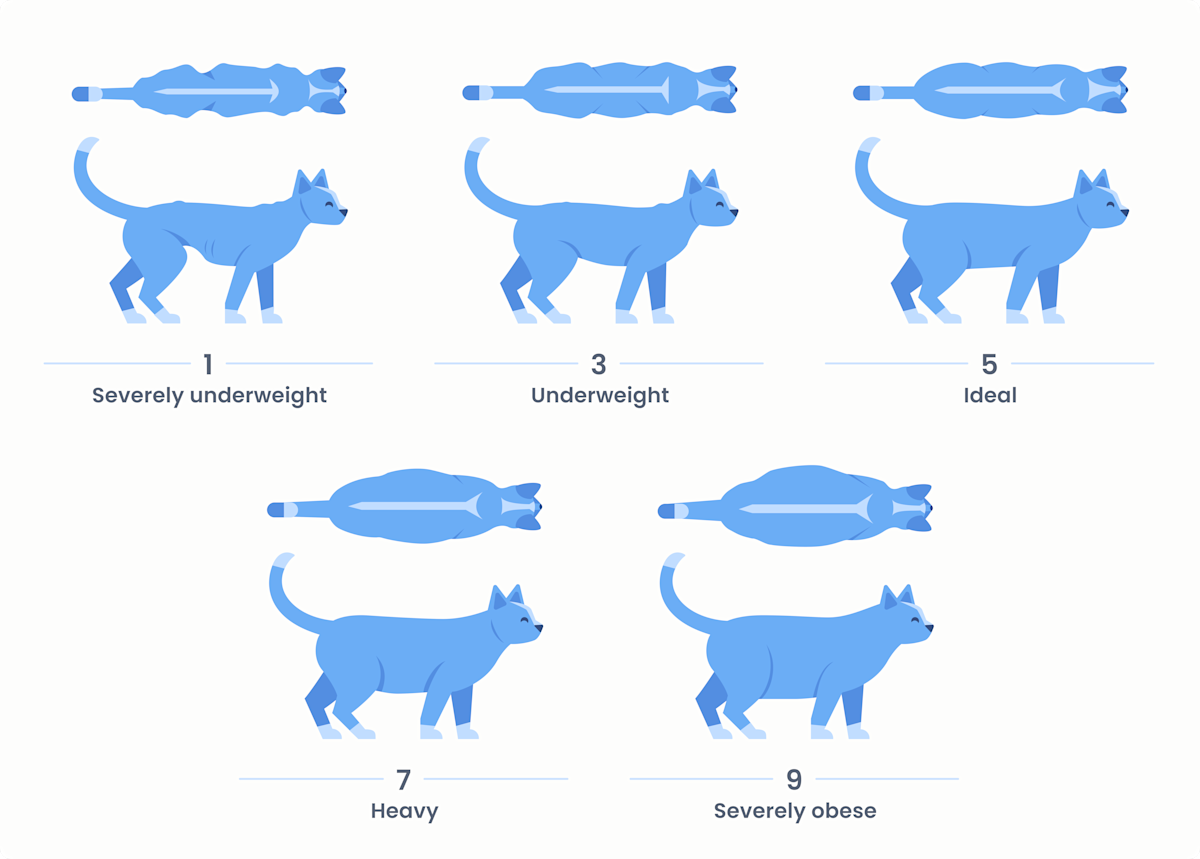
1 – Severely underweight
Ribs: clearly visible from a distance
Waist: extreme, with hip bones and spine sticking out
Belly: tucked up very tightly
Other: no fat anywhere and obvious muscle loss
2 – Underweight
Ribs: very easy to see and feel
Waist: extremely narrow
Belly: very obvious tuck
Other: spine and hip bones easy to see, with no fat covering
3 – Thin
Ribs: easy to feel and may be slightly visible
Waist: obvious
Belly: clear tuck
Other: bones along the lower back easy to see, with very little fat over the body
4 – Slightly lean
Ribs: easy to feel, with only a very thin layer of fat; not visible
Waist: clearly visible from above
Belly: noticeable tuck
Other: little or no fat on the belly
5 – Ideal
Ribs: can be felt with a light touch under a thin layer of fat; not visible
Waist: visible just behind the ribs
Belly: gently tucked up
Other: very little fat on the belly
6 – Slightly overweight
Ribs: can be felt, but with a slightly thicker fat covering
Waist: present but not obvious
Belly: little or no tuck
Other: small belly fat pad that is noticeable but not prominent
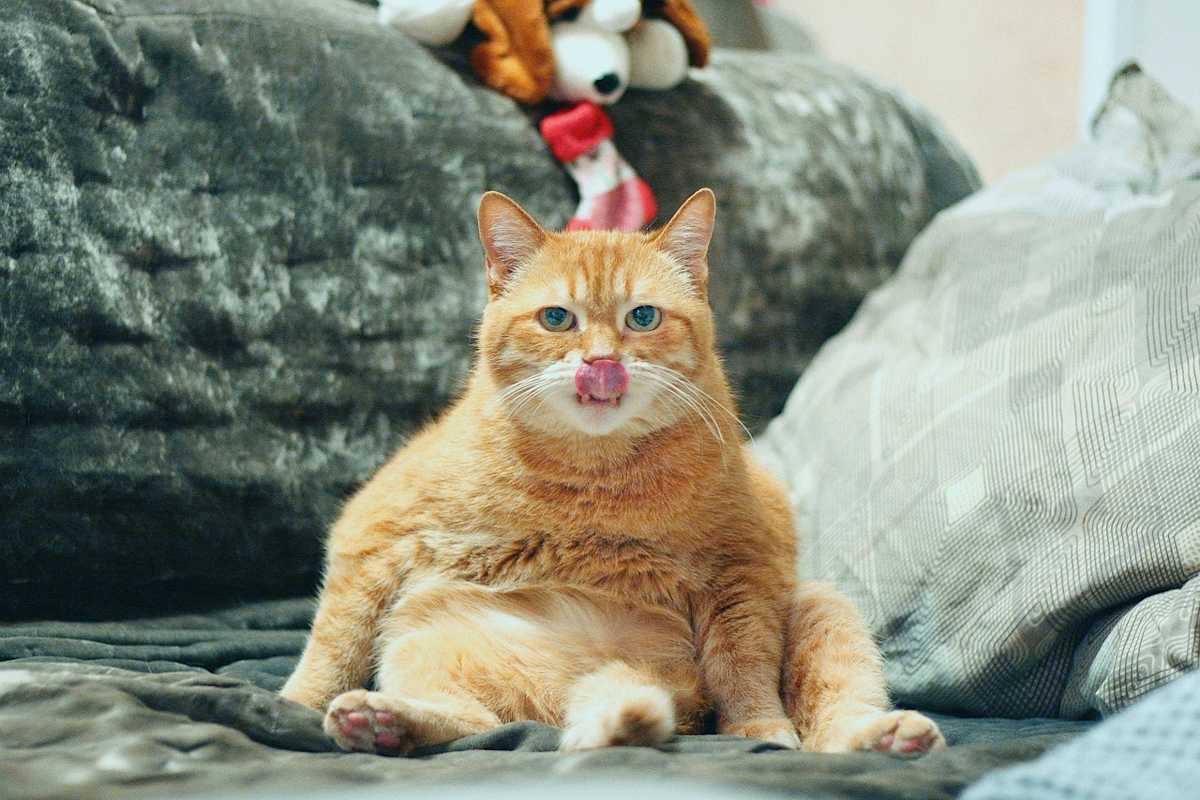
7 – Overweight
Ribs: hard to feel under fat
Waist: barely visible or absent
Belly: slightly rounded, with no tuck
Other: moderate belly fat pad
8 – Obese
Ribs: cannot be felt without firm pressure
Waist: none
Belly: clearly rounded, with an obvious fat pad
Other: noticeable fat over the lower back
9 – Severely obese
Ribs: cannot be felt under heavy fat
Waist: none, and the body looks round or oval from above
Belly: very rounded and may sag
Other: heavy fat over the lower back, face and legs
What is a healthy body condition score for cats?
A body condition score of 5 out of 9 is generally considered ideal for most cats. Scores below 4 suggest that a cat may be too thin, and scores above 5 suggest excess body fat.
The ideal can vary with age, breed and health. Older cats, and cats with long-term conditions such as kidney disease, may be healthier carrying slightly more weight, around 5–6 out of 9, as they are more prone to losing weight and muscle. Kittens are still growing, so steady growth is a better guide than a particular score.
Body condition score measures fat, not muscle, so a cat can have an ideal score but still be losing muscle, especially as they get older. Your vet can help you work out the best body condition for your individual cat.
What to do if your cat has an abnormal body condition score
If your cat’s body condition score is below or above the ideal range, speak to your vet. They can assess your cat’s body fat and muscle condition and check for possible underlying medical causes. They can recommend a suitable plan to help them reach and maintain a healthy body condition.
If your cat is overweight, read our guide to obesity in cats for more information about the health risks and how to help your cat lose weight safely.
Seek urgent veterinary advice if your cat also seems unwell, for example, if they are lethargic, off their food, vomiting, have diarrhoea, or are drinking or urinating more than usual.
Remember: Body condition scoring is a useful guide, but it doesn’t replace a veterinary check. Your vet can assess your cat’s body condition alongside their muscle mass and overall health.
Last updated