


Teeth brushing in cats

What it’s for
When should you brush your cat's teeth?
What kind of oral hygiene products are there?
How it’s done
How to brush your cat's teeth
Recommended products
Costs
Risks
Is it safe to have anaesthesia-free tooth cleaning at a non-vet facility?
Recovery tips
When to worry

Teeth brushing in cats
Brushing your cat’s teeth doesn't need to be a hassle. There are lots of ways to help keep your cat’s teeth clean and healthy. Yet, tooth brushing remains the most effective way.
50-90% of cats older than 4 years old have some form of dental problem. Most of these problems can be prevented with good oral hygiene. You should start brushing your kitten's teeth at an early stage, but it's never too late if your cat is older.
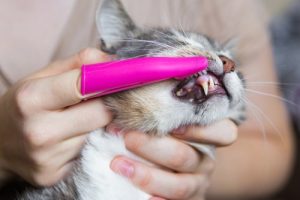
Why do cats need to have their teeth brushed? >Why do cats need to have their teeth brushed? [What it’s forWhen should you brush your cat's teeth?
Daily brushing should be your goal.
Plaque forms within 24 hours, which is why frequent tooth brushing is so important.
Brushing is the most effective way to get rid of plaque.
However, even using a brush, 20% of the plaque on tooth surfaces will be missed. This can explain why dental home care should be used in combination with regular professional care (cleanings under anaesthesia), just like with humans.
The frequency of professional cleaning under anaesthesia can depend on your cat’s medical problems as well as their genetics.
What kind of oral hygiene products are there?
Daily brushing should be your goal.
Plaque forms within 24 hours, which is why frequent tooth brushing is so important.
Brushing is the most effective way to get rid of plaque.
However, even using a brush, 20% of the plaque on tooth surfaces will be missed. This can explain why dental home care should be used in combination with regular professional care (cleanings under anaesthesia), just like with humans.
The frequency of professional cleaning under anaesthesia can depend on your cat’s medical problems as well as their genetics.
Here are some examples in order of effectiveness:
1. Tooth brushing
Ideally once a day, but at least once a week if no medical issues are found. Toothpaste often has a good taste that will make toothbrushing more enjoyable for your cat, but it is not essential. It’s the mechanical aspect of brushing that removes plaque from the teeth.
2. Wipes/gauze
Wipe their teeth daily. If your cat won't let you put a toothbrush in their mouth, wipes are a good alternative.
3. Dental prescription food
Hill's Prescription Diet Dental Care t/d is a good option since it helps reduce plaque, stains, and tartar build up.
4. Liquid or food supplements into their water or food
There is no liquid or supplement that will remove tartar on its own without toothbrushing. These should be considered a complement to brushing and professional dental care.
5. Dental chews and treats
These can encourage chewing and tongue action, which helps remove some plaque and tartar from teeth as a complement to brushing and professional dental care. Certain dental products may be unsuitable for your cat. Check that chew toys are:
Big enough to avoid choking or accidental swallowing.
Not too hard for your kitten or senior cat’s mouth.
Free of dangerous chemicals.
Well made to prevent splintering or easy destruction.
Free of squeakers, glass eyes, or other small decorations.
Just like us humans, proper dental care involves professional care.
It’s expected that your cat might need this type of dental care at your vet's at some stage of their life.
The frequency of these professional cleanings may depend on your cat’s genetics, dental problems and diet (when it’s mostly soft).
How to prepare your cat for tooth brushing >How to prepare your cat for tooth brushing [How it’s doneHow to brush your cat's teeth
After getting your cat used to having their teeth brushed, follow the next steps:
Apply a small amount of toothpaste to the toothbrush.
Place your cat’s head slightly up and pull back their lips.
Focus on cheek teeth and canine teeth, which build more tartar.
If your cat isn't cooperative, don't worry about brushing the tips or inside of the teeth.
Try to brush for around 1 minute.
Recommended products


Does it cost a lot to support your cat’s oral health? >Does it cost a lot to support your cat’s oral health? [CostsWhat are the risks of ignoring oral hygiene? >What are the risks of ignoring oral hygiene? [RisksIs it safe to have anaesthesia-free tooth cleaning at a non-vet facility?
Is it safe to have anaesthesia-free tooth cleaning at a non-vet facility?
Anaesthesia-free tooth cleaning is available in some places in the UK, which involves scaling the tartar off the teeth without the use of anaesthesia.
Performing scaling without anaesthesia is possible in humans since we are willing to cooperate. Is not possible to do a comprehensive scale treatment and have a pet remaining completely immobile.
Damage to sensitive teeth structures and an incomplete assessment of the general health of the teeth can easily result in more complicated problems in the future.
Simply removing the visible tartar from above the gum line is not effective or useful in tackling dental disease.
Recovery recommendations >Recovery recommendations [Recovery tipsWhen should you worry about your cat’s mouth? >When should you worry about your cat’s mouth? [When to worry


