


Urine tests in cats

What it’s for
When do cats need a urine test?
What do urine tests measure?
How it’s done
How to collect a urine sample at home?
Costs
Risks
Recovery tips
When to worry

Urine tests in cats
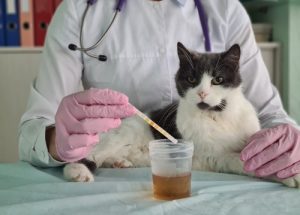
Urine tests in cats are used to check their wee for signs of infection and other issues. It’s performed frequently as it provides a lot of information. A urine sample can be easily collected without stressing your cat.
Also called urinalysis, it includes several tests, such as a dipstick, specific gravity, and laboratory tests. Urine can also be checked under the microscope to get even more information. It is a valuable test for both healthy and sick animals and should be included in any comprehensive evaluation of a cat’s health.
Why do cats need urine tests? >Why do cats need urine tests? [What it’s forWhen do cats need a urine test?
Your vet may recommend a urine test as part of screening lab work to assess your catʼs health, or if they are showing any of the following signs:
Weeing and/or drinking more than normal
Straining to urinate
Blood in the urine
Weeing in inappropriate places
Weight loss
Vomiting
What do urine tests measure?
Urine tests can measure different things depending on the type of test as well as the type of urine collection method. The most common types of urine tests are:
Dipstick
Paper dye chemical test that indicates the presence of blood, glucose, protein and other important parameters present in the urine sample.
Urine Specific Gravity (USG)
Test to assess the concentration of the urine.
Urine sediment
Microscopic evaluation that can detect bacteria, crystals, cells and other solid material in the urine.
Urine culture and sensitivity
More accurate to detect an infection in the urine and determine the correct antibiotic to be used. The urine sample has to be sent to an external lab.
Protein to creatinine ratio
This test provides a more accurate measure of the amount of protein in the urine. This is important information when assessing the kidney function.
How to collect a urine sample in cats >How to collect a urine sample in cats [How it’s doneHow to collect a urine sample at home?
-
If you can’t get non-absorbent litter, you may try:
Simply cleaning and emptying the tray.
Placing small amounts of shredded paper/newspaper on the tray.
If your cat usually goes outside to wee, try keeping him indoors with a tray and non-absorbent litter.
Cats with urinary problems will sometimes urinate on the floor or in the bath/shower. You can collect a sample from these places and let your vet know where it came from.
If you can’t get non-absorbent litter, you may try:
Simply cleaning and emptying the tray.
Placing small amounts of shredded paper/newspaper on the tray.
If your cat usually goes outside to wee, try keeping him indoors with a tray and non-absorbent litter.
Cats with urinary problems will sometimes urinate on the floor or in the bath/shower. You can collect a sample from these places and let your vet know where it came from.
How much does it cost to do a urine test? >How much does it cost to do a urine test? [CostsSome urine collection methods may involve risks >Some urine collection methods may involve risks [RisksWhat to expect from your cat when recovering from a cystocentesis >What to expect from your cat when recovering from a cystocentesis [Recovery tipsThings to watch out for if your cat had a cystocentesis >Things to watch out for if your cat had a cystocentesis [When to worry
What to expect from your cat when recovering from a cystocentesis >What to expect from your cat when recovering from a cystocentesis [Recovery tipsThings to watch out for if your cat had a cystocentesis >Things to watch out for if your cat had a cystocentesis [When to worry


