


Sunburn in Dogs: Signs and What to Do

Can dogs get sunburn
Symptoms
Most at risk
First aid
Repeated exposure
Prevention
Sunburn vs heatstroke
Conclusion
Products in this article

Sunburn in Dogs: Signs and What to Do
With the UK summer temperatures soaring and heat waves rolling in, it is important to take into consideration sun safety for ourselves and our dogs. Dogs can get sunburn too, particularly on light, unpigmented or sparsely haired areas of skin. With the typical UK weather unpredictability, even if it is feeling mild or breezy, it is easy to assume sunburn is not possible. However, temperature is not always a guide to sunburn risk. Dogs can still get sunburn, particularly if they enjoy relaxing in the sunniest spot in the garden.
Here we look into what sunburn looks like in dogs, which dogs are most vulnerable, safe first aid and realistic prevention strategies.
Can dogs get sunburn?
Yes, dogs can get sunburn just like humans.
While a dog’s coat provides some physical protection from sunlight, it is not enough in sparse or light coloured areas to fully protect their skin. Skin pigment also provides a degree of natural protection. But neither fur nor the pigment makes a dog’s skin completely immune to ultraviolet (UV) damage.
UV radiation can injure exposed skin, particularly where the coat is sparse or absent, and pale or unpigmented skin is more vulnerable than darker, well-pigmented skin. It can happen without notice, as a dog does not necessarily need to feel overheated to become sunburnt.
Depending on the amount of UV exposure and reaction, two things can occur:
Sunburn is an acute skin reaction following excessive UV exposure
Solar or actinic dermatitis (a painful skin inflammation) develops through repeated or prolonged sunlight exposure and can produce progressively more serious skin changes over time.
What does sunburn look like in dogs?
Possible signs of sunburn can include:
Pink or red skin
Tenderness or discomfort over the area
Skin dryness or flaking
Itching, licking, chewing or rubbing at the area
Crusting
Blistering or weeping in severe cases
If you are concerned your dog has been exposed to too much UV or has been out in the sun, check your dog over carefully for any signs of a sunburn developing:
Part their coat gently to look at the skin underneath, and compare any suspected areas with nearby unaffected skin.
Redness may be difficult to recognise on naturally pigmented skin, so feel the area with the back of your hand to check the surface temperature for any heat from inflammation. In some dogs, tenderness, altered skin texture, flaking or repeated licking may be more noticeable.
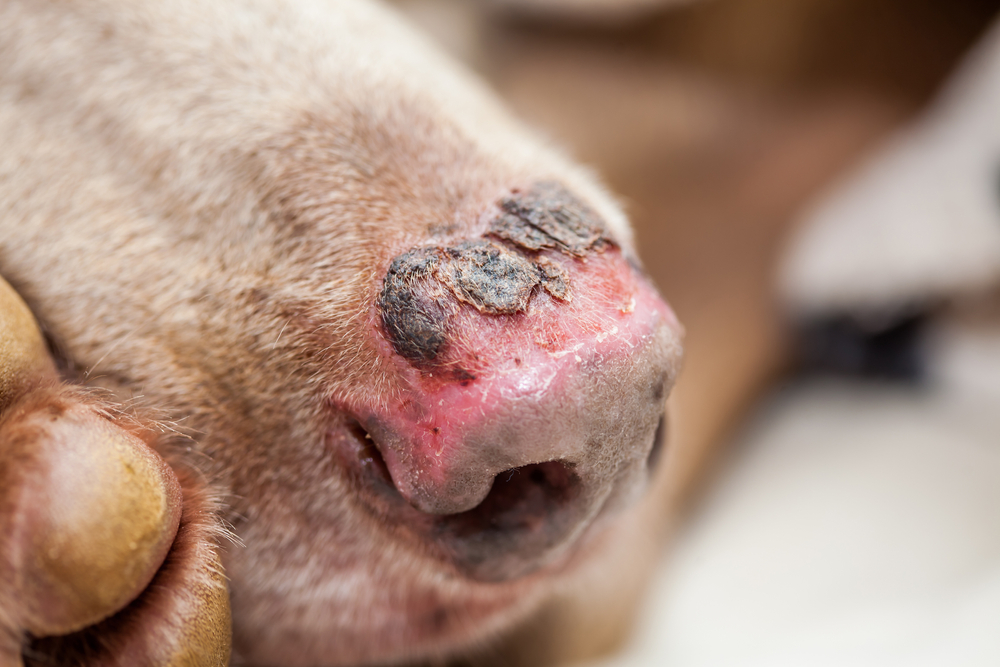
Skin changes can be vague and non-specific in appearance, with other skin conditions causing similar symptoms. Signs that need closer inspection from your vet include:
Recurrent scaling or crusting
Persistent hair loss
Thickened or irregular skin
Ulcers
A new or changing lump
A wound that repeatedly breaks down or does not heal
Which dogs are most at risk?
The risk of sunburn depends primarily on the amount of exposed or vulnerable skin, along with the duration of exposure to UV radiation.
Commonly affected areas, and where to check first, include places such as:
Ear tips
Bridge and top of nose
Eyelids
Lip margins
Belly
Groin and inner thighs
Bald patches
Scarred areas
Areas that have been closely clipped
These areas tend to have less protective hair or may be exposed while a dog lies in the sun.
What to do if your dog has sunburn
Initial first aid for a dog that has sunburn:
-
Move your dog out of direct sunlight
Take them indoors or provide reliable shade to prevent further UV exposure
-
Cool the affected skin gently
Hold a cool, damp compress against the area without rubbing, replacing as it warms, do not apply ice directly
-
Prevent additional irritation
Discourage licking, scratching, rubbing or chewing at the area
-
Ask a vet for advice on next steps for individual needs
Contact your vets or one of our Joii vets if the diagnosis is uncertain or if the skin looks sore
When to contact a vet
Seek same-day veterinary advice if you notice any of the following:
The skin is blistered, broken or weeping
Your dog appears markedly painful
A large area is affected
The burn involves the eyes or face
Your dog seems unwell in themselves alongside skin symptoms (such as vomiting, lethargy or not eating)
Can repeated sun exposure cause lasting damage?
Repeated UV exposure can cause chronic actinic or solar changes in the skin. Over time, this damage can be associated with solar-induced tumours, including squamous cell carcinoma.
This does not mean every episode of sunburn leads to these changes, but prevention is particularly important for dogs with repeatedly exposed pale or sparsely haired skin.
How to prevent sunburn in dogs
It is important to be aware of the risk day to day, and plan around UV, not temperature. Check the Met Office UV index before prolonged outdoor activities. Choose early-morning or late-day walks when UV exposure is lower, and provide dependable shade rather than assuming your dog will move out of the sun independently.
Discourage prolonged sunbathing during stronger UV periods, which is commonly between 11 am and 3 pm, and avoid unnecessarily close clipping, particularly in dogs with pale skin. If needed, it can be useful to consider a comfortable UV-protection shirt or suit for vulnerable skin over the body.
Choosing dog-safe sunscreen
Choose a sunscreen that is specifically labelled as pet-safe, ideally one that offers waterproof protection and has an SPF of 30 or higher.
It is safest to do a small patch test for 24 hours before using it for wider application to ensure there is no reaction on your dog’s skin. The sunscreen should be applied at least 15 minutes before exposure, and discourage your dog from licking it. Reapply according to the label and again after swimming to ensure there is ample protection.
It is not recommended to use a human sunscreen, as many are zinc-containing products that can cause an upset stomach if licked and swallowed, and repeated ingestion can cause more serious problems.
Sunburn or heatstroke?
Sunburn is primarily an injury to the skin, whereas heatstroke is a systemic emergency affecting the whole body. A dog can potentially experience either problem without necessarily experiencing both.
Signs that require urgent veterinary help include:
Heavy or excessive panting
Distress or agitation after sun exposure
Weakness
Collapse
Vomiting or diarrhoea
Altered awareness or responsiveness
Pale or redder gums
Conclusion
Dogs can enjoy the summer weather safely with a little planning: checking the UV forecast, making shade readily available and protecting pale or thinly haired skin.
If a sore patch appears or does not heal, seek veterinary advice rather than assuming it is a simple sunburn.
If you are unsure whether a sore patch is a sunburn, speak to one of our Joii vets who are available 24 hours a day for personalised advice.


