


Ear problems in cats

Overview
Symptoms
Risk
Diagnosis
Vet treatment
Home treatment
Tips
Prevention
When to worry
Recommended products

Ear problems in cats
Ear problems can affect cats, although they tend to be less common than in dogs. There are many possible causes, including ear mites, infections, allergies, foreign bodies and growths.
Ear problems can affect cats of any age, although some cats may be more prone to certain conditions. Ear mites are particularly common in kittens and can cause intense itching and a dark, waxy discharge from the ears. Other common signs of ear problems include redness, pain, discharge or a bad smell.
Ear disease can affect different parts of the ear, including the external, middle or inner ear. Ear problems are often referred to as otitis, which means inflammation of the ear.
What are ear problems in cats?
Ear problems in cats have many possible causes, including allergies, parasites, foreign bodies, and infections.
Ear problems can affect cats of any age.
Factors such as reduced airflow, moisture and changes to the skin lining the ear can make infections more likely.
Ear problems are often easier to treat when caught early. Uncomplicated infections should improve within a few weeks with appropriate treatment but this can vary depending on the severity.
If ear problems are left untreated or keep returning, the ear can become inflamed, thickened and painful. These changes can make it harder to treat.
Some cats may need long-term management if they have an underlying condition, like allergies. Underlying conditions may make them more prone to ear problems.
Finding and managing the underlying cause is important. Otherwise, they are more likely to recur.
Ear disease can affect different parts of the ear: the external ear canal (Otitis externa), the middle ear (Otitis media) or the inner ear (Otitis interna).
-
Middle and inner ear disease can develop when infection or inflammation spreads from the external ear through the eardrum. Repeated infections and inappropriate ear cleaning can contribute to eardrum damage.
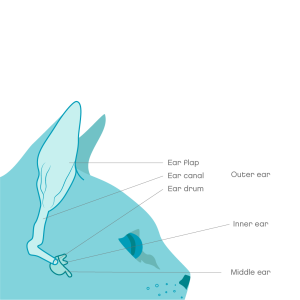
Anatomy of a cats ear
Common causes of ear problems in cats include:
Allergies: including food allergies and environmental allergies
Bacterial and yeast infections
Foreign bodies, such as grass seeds
Injuries, such as cat bite wounds
Ear growths, including tumours or polyps
Solar dermatitis (ear edge dermatitis): inflammation of the tip of the ear due to sun exposure. This is more common in cats with white or light ears.
Incorrect or excessive ear cleaning
Ear problems can be very painful for cats, and if left untreated, they may become more difficult to manage or lead to long-term changes in the ear.
If your cat shows signs of an ear problem, speak to a vet as soon as possible. Our Joii vets are available 24 hours a day if you have any questions.
Symptoms of ear problems in cats
Ear problems can affect one or both ears. Symptoms may include:
Ear irritation, such as rubbing or scratching at the ears
Pain, may become unusually irritable when handled
Red, inflamed skin inside the ears
Discharge, such as wax, pus, or blood inside the ears
Hair loss, scabs or sore skin around the ears
A bad smell from the ears
A head tilt or unsteady walking
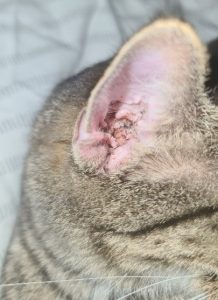
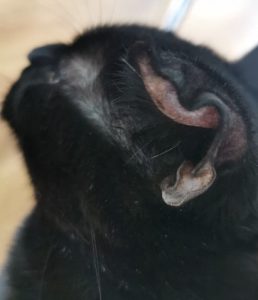
Frequent or severe head shaking can lead to an aural haematoma. This is an uncommon condition in cats. Blood collects within the ear flap, causing it to swell. Aural haematomas are usually painful.
Are some cats more at risk of ear problems than others?
Any cat, regardless of age or breed, can develop an ear problem. Some cats may be more prone to ear problems because of their ear shape or anatomy. Ear mites tend to be more common in kittens and can spread more easily between cats that are in close contact.
Factors that can contribute to ear problems in cats include:
Excessive or inappropriate ear cleaning, which can irritate the skin in the ear canal
Underlying skin disease or allergies
Conditions or medications that affect the immune system, which may make some cats more susceptible to infection
Is my family at risk of catching ear problems from cats?
None of the common causes of ear disease are known to transfer from cats to humans.
How are ear problems diagnosed in cats?
Diagnosis of ear problems in cats usually begins with a full physical examination. Your vet may use an otoscope to look down the ear canal and, where possible, examine the eardrum. This can help identify any abnormalities, such as inflammation, growths or foreign bodies.
Checking the eardrum is important before certain ear drops are used. Some medications can cause serious side effects if the eardrum is damaged.
Your vet may be able to diagnose an ear problem based on how the ear looks on the examination.
Depending on the findings, further tests may include:
Ear swab and cytology: A sample of the material from inside the ear is checked under a microscope to look for bacteria, yeast, and inflammatory cells. Mites may also be seen this way.
Culture and sensitivity: This test is more commonly advised in recurrent or severe infections. A sample may be sent to a laboratory to check what organisms are present and determine the most effective treatment.
Ear flushing: May be recommended to remove debris from the ear canal in some cases.
Biopsy: For any growths or abnormal tissue in the ear that need further investigation.
Imaging: X-rays, CT or MRI may be recommended for certain cases, especially those affecting the middle and inner ear.
Tests for underlying conditions: May include a diet trial, allergy testing, or blood and urine tests.
Cats often require sedation or anaesthesia for some of these procedures, especially if the ears are painful. Your vet will discuss this with you if it is needed.
Vet treatment of ear problems in cats
Treatment of ear problems in cats depends on the underlying cause and may involve one or more of the following:
Ear cleaners
Help remove wax and other debris from the ear canal.
Can prepare the ear for medicated drops.
Some products have additional properties that help reduce the growth of bacteria or yeast.
Your vet will advise which ear cleaner is the most appropriate and how often it should be used.
Medicated ear drops
May contain antibiotics, antifungal medication, anti-inflammatory medication, or a combination of these.
There are different types. Some need to be applied daily, and others are longer-lasting.
Your vet may take a sample from the ear to assess which treatment is appropriate. This sample may be sent to a laboratory for culture and sensitivity, especially in recurrent or difficult-to-treat infections.
The treatment course may continue for 1 to 2 weeks or longer, depending on the cause and severity of the ear problem.
Always follow your vet's instructions and complete the prescribed course of treatment.
Oral medications
May be recommended when topical treatment (drops) cannot be given safely or effectively.
Often used if an infection has spread beyond the external ear, when middle or inner ear disease is present.
Surgery and other procedures
An ear flush may be recommended to remove built-up wax or other debris.
Foreign bodies, such as grass seeds, may need to be removed from the ear.
-
Some cats may need surgery to remove growths such as inflammatory polyps or to treat severe, chronic ear disease that has not responded to medical treatment. There are several different procedures, including:
Lateral wall resection: Removal of part of the outer wall of the ear canal to improve ventilation and access to the canal.
Vertical ear canal ablation: Removal of the vertical part of the ear canal.
Total ear canal ablation (TECA): Removal of the entire ear canal. This is generally reserved for severe, chronic disease when other treatments are no longer effective.
Antibiotics are not needed for every ear infection. Your vet may examine a sample from the ear to check for bacteria and yeast before deciding which treatment is appropriate. Where possible, antibiotics are used only when they are needed, as unnecessary use can contribute to antibiotic resistance.
How to look after a cat with ear problems at home
Speak to a vet before using any home remedies for your cat’s ears. Some products may irritate the ear or make the problem worse.
Use any medication exactly as advised by your vet. Do not skip any doses or stop treatment early unless your vet tells you to. If you are struggling to use the medication, speak to your vet, as an alternative may be available.
If your cat's symptoms do not improve, or return after treatment, arrange a recheck with your vet as soon as possible. Recurrent ear problems may indicate an underlying cause that needs further investigation.
Speak to a vet as soon as you notice signs of an ear problem. Ear disease is generally easier to manage before the ear becomes thickened or narrowed.
Make sure your cat has appropriate parasite prevention for their age and lifestyle. Your vet can advise you on this.
Only use an ear cleaner recommended by your vet. Cleaning may be helpful as part of treatment or for cats prone to ear problems, but excessive cleaning can irritate the ear.
A protective collar can temporarily help prevent your cat from scratching or causing further injury to the skin around the ears.
If underlying allergies are contributing to your cat's ear problems, your vet may recommend dietary management, medication or other treatments depending on the suspected cause.
Your vet may also recommend supplements to help reduce itching and support the skin barrier.
Our Joii vets are available 24 hours a day for any questions you have about how to help at home.
Tips on how to live with a cat with ear problems
Ear problems can be frustrating to treat, especially if they keep coming back. However, with the right management, most cats can have a good quality of life.
The outlook is generally good when the underlying cause is identified and managed, although some cats may need long-term treatment to prevent flare-ups.
Cats with underlying allergies or other conditions often need ongoing medication, dietary management or regular ear care.
More complex cases may involve additional costs, particularly if allergy treatment, repeated investigations or surgery is needed.
Learn to recognise the early signs of an ear problem and speak to your vet as soon as they return. Early treatment can help prevent the ear from becoming severely inflamed or damaged.
Tips on how to prevent ear problems in cats
Some causes of ear problems in cats cannot be prevented, but there are ways to reduce the risk of flare-ups and keep the ears healthy.
Get your cat used to handling: Gently handling your cat's ears from a young age can make routine checks and cleaning easier and less stressful.
Manage underlying allergies: If your cat has allergies, follow your vet's advice on diet, medication and other treatments to help reduce recurrent ear problems.
Keep parasite prevention up to date: Use appropriate parasite prevention recommended by your vet.
Check the ears regularly: Look for redness, discharge, swelling, a bad smell or other changes.
Use a cat-safe sunscreen on the tips of your cat's ears if they are white or pale and your cat spends time outdoors. Ask your vet which product is suitable for cats.
Only clean the ears when needed: Some cats benefit from regular ear cleaning, while others may not. Your vet can recommend an appropriate ear cleaner and advise how often to use it. Over-cleaning can irritate the ear and make problems worse.
Check your cat's ears regularly, especially if they spend time outdoors: Look for foreign material such as grass seeds. If you find something lodged in the ear, don't try to remove anything that is deep inside the canal yourself; contact your vet as soon as possible.
When you should be worried about ear problems in cats
Seek help from your local vet if:
Your cat's ears are extremely itchy or painful
Your cat has a head tilt or loss of balance
Your cat’s ear infection has not cleared with the prescribed medication
Speak to one of our Joii Vets if:
You have any questions about what ear cleaners are safe for cats
You want advice on how to clean your cat's ears
Your cat has repeated problems with ear infections and you are not sure what to do next
Recommended products


