


Itchy cats

What to do
Causes
When to worry
Prevention
Recommended products for itchy cats
Diagnosis
Home treatment
Vet treatment
Risk
Other causes

Itchy cats
Itchy skin and skin conditions are among the most common reasons cats are taken to the veterinarian. A wide range of underlying issues can cause your cat to feel itchy.
Some conditions are more common in different breeds or at different ages. Depending on the condition, cats may need lifelong treatment. If your cat becomes itchy, consult a vet for advice as soon as possible. If left untreated, the problem can worsen and lead to severe self-trauma, hair loss, and skin infections.
What to do if your cat is itchy
Depending on how severe the signs are, different treatment options may be available.
Mild itching: when the symptoms are infrequent, such as scratching once or twice a day, or they have a few scabs on the skin. Mild symptoms can often be treated at home, depending on the cause. Skin supplements, diet changes, parasite control, and topical skin treatments can all be useful. Speak to our Joii vets for more information.
-
Moderate or severe symptoms require a vet visit and prescription medication. Signs include constant scratching - they will stop what they are doing, such as eating or sleeping, to scratch or rub themselves. Or if they have large bald areas or weepy, raw skin. Contact your local veterinarian for an appointment as soon as possible.

cat scratching
Why is your cat itchy?
There are many different things that can cause your cat to develop itchy skin. Click on the links to explore each cause in more detail.
Allergies
Allergies are the most common cause of itching in cats and can be split into different categories:
Flea allergy dermatitis: an infection of the skin caused by flea bites.
Food allergies: an allergy to something in the food. Usually the protein source, such as chicken or beef.
A contact allergic reaction: sudden in appearance and often seen as bumps all over the skin, usually starting around the face. Also known as urticaria, or hives.
Feline atopic skin syndrome: a type of skin allergy usually caused by environmental allergies such as pollen, dust mites, or smoke.
Parasites
Fleas: are the most common cause of itching in cats. Indoor cats can get fleas too.
-
Mites:
Demodex and Sarcoptes (mange)
Skin infections
These are often secondary to allergies or parasites.
Bacterial, yeast, or fungal
Ear disease: most often related to allergies. Can also be due to foreign bodies, ear mites, or masses in the ear.
Others
Pain: often when it involves a specific area. Can cause cats to chew or bite at an area of skin. Includes acute pain, such as wounds, and long-term pain, such as arthritis.
Wounds or injuries: such as cat bite abscesses.
Stress: a common cause of overgrooming, often caused by a change in your cat's environment or routine.
When to worry about your itchy cat
Seek help from a vet if:
Your cat is constantly itching throughout the day.
Your cat develops any severe skin lesions, or they are widespread over the body.
Your cat is unwell as well as itchy.
Your cat has a sudden allergic reaction with breathing problems.
Joii can help if:
Your cat has a mild itch or has started scratching their ears.
Your cat has small or localised skin issues.
You have questions about what skin supplements or ear cleaners are best to use.
You have questions about the best parasite control for cats.
You have any questions about food allergies or how to do diet trials.
How to prevent your cat from becoming itchy
Use regular parasite control that covers fleas, mites, ticks, and worms.
Regularly clean your cat’s bedding, collar, and bowls.
Dust and vacuum the house often, and avoid sprays or perfumes in the house.
Brush your cat regularly and check for any abnormal areas of skin.
Feed your cat high-quality, complete food for their age and lifestyle. Some brands also have a special skincare line with high omega oil levels.
Skin supplements containing omega oils for cats with skin diseases.
Dust mite spray for the house is useful for cats with those allergies.
Get your cat checked out by a vet as soon as possible if they become itchy to help prevent self-trauma to the skin.
Avoid any sudden changes in your cat's routine and environment.
Make sure your cat has all the key resources they need for a happy and healthy life. Our Stress in cats article has more information about this.
Our Joii team are available 24 hours a day for advice, call us now if you have any questions.
Recommended products for itchy cats


How to know if your cat is itchy
The medical term for itching is pruritus. It may not always be obvious that your cat is itchy. Some cats will secretly scratch or show other signs of being itchy, such as chewing, biting, rubbing, and licking.
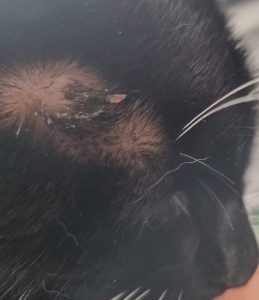
You may notice skin lesions, such as:
Hair loss or bald patches, usually caused by overgrooming
Pink or red skin
Dark or thickened skin
Scabs, dry skin, a rash, hives, blisters, or black spots
Bleeding skin from self-trauma
Greasy skin, dandruff and flakes
Lumps and swellings
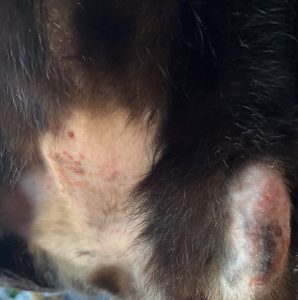
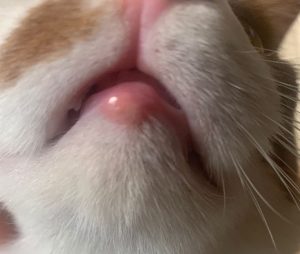
An eosinophilic reaction is an inflammatory response often associated with allergies or parasites. It has three characteristic signs, including:
Swollen lip or chin
A plaque: red, thickened, painful and itchy area of skin that is common on the thighs, face and neck
A granuloma: a weepy and swollen area of skin that is common on the thigh, paws and in the mouth
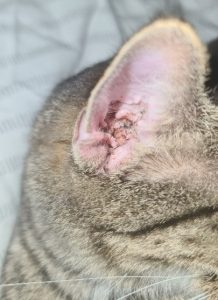
In itchy cats, especially those with allergies, other areas of the body may be affected, such as:
Ear disease: itchy, red, discharge (including wax), smelly, swollen, shaking head
Eyes: itchy, weepy, red, holding them closed
Runny nose and sneezing
Stress can cause both physical and behavioural symptoms, such as urinating abnormally, lethargy, a scruffy or matted coat, and weight loss.
Your cat may show other signs too, such as vomiting, diarrhoea, weight loss, pain, or lethargy. Speak to a vet as soon as possible if your cat is showing signs of illness.
How to treat an itchy cat at home
It’s always best to seek the advice of a vet if your cat shows signs of being itchy. Home remedies may be helpful for certain conditions, and your vet can guide you on the best ones to look for.
Allergies, in particular, can be tricky to treat, and it’s recommended to take a multi-modal approach. This means using different products and making changes at home to improve the signs.
Use a buster collar, inflatable collar, or medical pet suit to prevent further self-trauma.
Calming or medicated shampoos, mousses, wipes, or gels are useful for certain conditions, such as skin infections. These are often antibacterial and also soothe the skin.
Some ear cleaners can also help with mild irritations or infections.
Speak to a vet before using any of these home remedies, such as olive oil, apple cider vinegar, or coconut oil. These have limited research in cats and may be more harmful for certain conditions.
Make sure your cat is up to date with parasite control, especially fleas.
Allergies
For mild itching, skin supplements containing omega oils can help protect the skin barrier.
A diet trial with a novel or hydrolysed protein is useful to check for food allergies. A novel protein is one that your cat has never eaten before. A strict trial should last 6-8 weeks before assessing the results; cut out all other food and treats.
Make sure all pets in the household are up to date on parasite control that covers at least fleas and mites.
If certain allergies are diagnosed: avoidance of these will help reduce the symptoms.
Stress
Calming supplements and pheromone adapters, along with advice from a vet.
Help from a certified behaviourist is often advised.
Other causes
Follow the links to see treatment for the following:
Vet treatment for itchy cats
If the symptoms are severe, your cat will need prescription medication from your local vet. This usually includes a full physical examination to assess the skin, ears, and all other body parts and determine if any further tests are needed.
Prescription medications include:
Anti-itch medications: there are many different types of these, and your vet will work with you to find the best solution for your cat. Includes steroids and Atopica.
Immunotherapy: A medication made specifically for each patient based on the results of skin or blood tests for allergies. Helps to desensitise the body to different allergens. It works to reduce the severity of the symptoms of allergies and is usually given by injection every 2-4 weeks.
Anti-inflammatories: NSAIDs (non-steroidal anti-inflammatory medication). Often used to treat pain, wounds, and anal gland disease.
Antihistamines
Parasite treatments
Antibiotics: come in many different forms, such as shampoo, cream, tablets, liquid, or injection
Antifungals
Anxiety medication for cats with underlying behaviour concerns
Your cat may need tests to diagnose certain conditions:
Skin scrapes, hair plucks, or biopsy
Ear or anal gland flush and swab
Intradermal skin testing if allergies are suspected
A strict food trial to check for allergies in the food
Imaging, including x-rays, usually done if pain is suspected
Are some cats more at risk of becoming itchy?
Rescue cats and those living in a multi-cat household can be more at risk of stress.
Ear disease is often associated with an underlying allergy.
Cat bite abscesses are more common in male, outdoor cats.
Other causes of itchy cats
Nutrient deficiencies
Ticks: don’t tend to be itchy but can cause skin reactions.
Lice: not common in cats. Can be easily prevented with most routine parasite control.


