


A practical guide to puppy skin and ear care

Why is grooming important for puppies?
Bathing your puppy
Ear care for puppies
Common ear problems in puppies
When to contact your vet for skin or ear problems
FAQs: Grooming and ear care for puppies
Products in this article

A practical guide to puppy skin and ear care
Owning a puppy is exciting, but it can get messy. From muddy paws to mystery smells, grooming quickly becomes part of everyday life. But grooming isn’t just about keeping your puppy looking cute. It’s an important part of preventative healthcare that supports skin health and ear hygiene. By using the right products and monitoring your puppy's skin regularly, you can prevent many common problems before they start.
This vet-written guide covers the essentials of bathing and ear care, providing practical advice to help you establish a safe and stress-free routine from the start.
Why is grooming important for puppies?
Puppies are still developing their skin barrier. Their skin is often more sensitive than that of adult dogs. Grooming helps by:
Removing dirt, allergens, and other debris
Reducing unpleasant odours
Preventing mats from forming and skin infections
Helping you spot early signs of health issues, such as allergies
Getting your puppy used to calm grooming habits early makes future vet exams, nail trims, and coat care much easier.
Bathing your puppy
How often to bathe your puppy
Bathing needs vary widely between puppies of different breeds. Some puppies need weekly baths - especially if they love mud or rolling in unpleasant things, or they are prone to skin infections. Others may never need a bath! Though this is uncommon.
It’s really important to be aware that overbathing can strip away natural oils (sebum), disrupt the pH balance and the skin microbiome, leading to itchy, dry skin that can become infected.
As a general rule, once a month is usually enough, unless your puppy gets particularly dirty or has a medical condition requiring more frequent bathing.
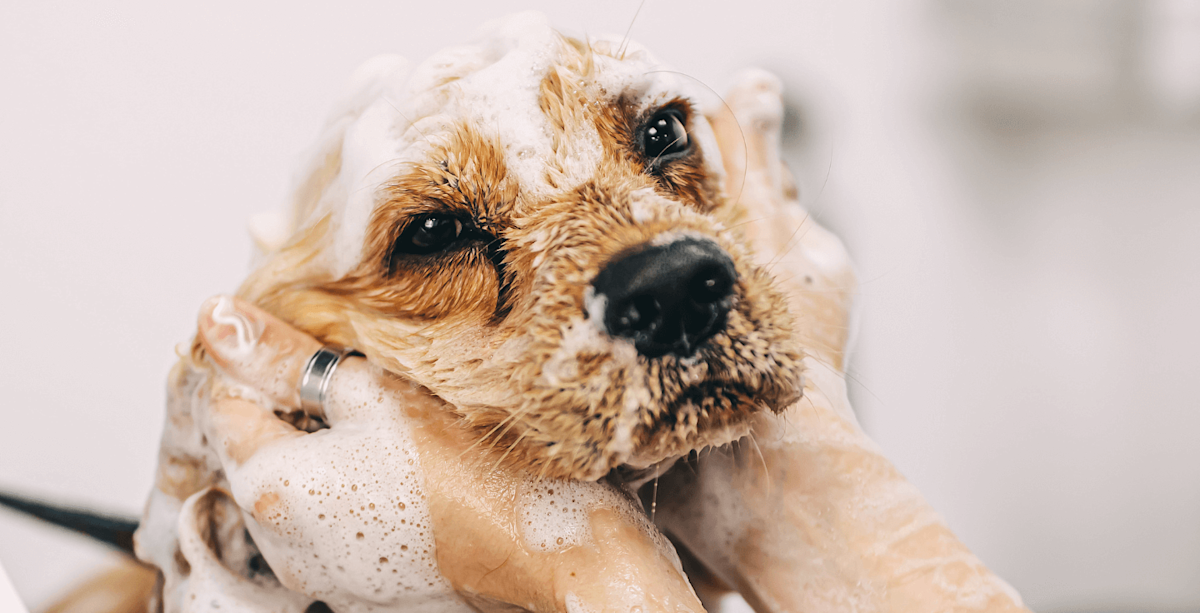
How to safely bathe your puppy
Choose a warm, quiet and secure space
Gather everything you need: shampoo, towels, and grooming tools
Use lukewarm water
Speak calmly and move slowly
Make the experience positive with praise and rewards
Step-by-Step
Gently soak your puppy’s body with lukewarm water. Avoid the eyes and ears.
Use a puppy-specific shampoo. Massage the shampoo gently.
Rinse carefully and dry thoroughly to prevent skin issues.
Choosing the right shampoo for your puppy
We recommend always using dog-specific products. Human shampoos can disrupt your dog’s skin microbiome and may worsen irritation. Puppies have sensitive skin; choose a safe product that is mildly/unscented, pH-adjusted and free from harsh ingredients like parabens and silicons.
During skin flare-ups, targeted products are useful, such as:
Antibacterial/antifungal shampoos for skin infections
Oil-regulating shampoos for greasy or dandruffy skin
Once the flare settles, the goal shifts to maintaining hydration and supporting the skin barrier with a safe maintenance shampoo. For puppies without skin issues, there are many options, such as detangling, shedding control, odour control, and oatmeal-based products.
How bathing can help with skin issues
In puppies with skin disease, the protective skin barrier is weakened. Common symptoms include scratching, chewing their paws, redness or irritation, white-headed spots or flaky skin.
Appropriate bathing can reduce irritation and make your dog much more comfortable.
Common skin issues that improve with targeted bathing:
Allergies (even puppies can develop allergies)
Bacterial or yeast infections
Dandruff or flaky skin
Mild seborrhoea (greasy skin conditions)
Ear care for puppies
Ear care is often overlooked until there’s a problem. Some puppies may be more prone to ear problems than others, such as those who love swimming or breeds with narrow, hairy or floppy ear canals.
Most healthy puppies do not need routine ear cleaning. Just like overbathing, overcleaning can irritate the ear canal. Instead:
Check their ears weekly, especially after walks in long grass
Clean only if there is visible debris or if your vet recommends this due to their ear shape or underlying allergies
Dry their ears gently after bathing or wet walks
How to safely clean your puppy’s ears
If your pup is prone to wax or ear infections, a little regular "ear maintenance" goes a long way in keeping them comfortable.
Use a vet-approved ear cleaner
Gently lift the ear flap
Apply cleaner into the canal (as directed)
Massage the base of the ear for 20–30 seconds
Allow your puppy to shake
Wipe away loosened debris with soft cotton wool or swabs (never use cotton buds inside the canal!)
Common ear problems in puppies
Ear problems can escalate quickly. Common signs include frequent head shaking, redness or discharge in the ear canal, and an unpleasant smell.
Common causes of ear problems include:
Ear mites (more common in young dogs)
Things stuck in the ear canal, like grass seeds
If you notice signs of an ear problem, seek veterinary advice as soon as you can. Untreated ear infections can become much harder to manage.
When to contact your vet for skin or ear problems
It’s often difficult knowing when a "little itch" has become a "big problem." Skin and ear issues are notoriously stubborn, and if they get a head start, they can quickly turn into a much longer (and more expensive) recovery for your pup.
What’s normal?
Occasional scratching or head shaking, a small amount of dirt in the ears, and the odd small white spot or pimple that clears within a few days are all normal parts of puppyhood.
We recommend checking in with your vet if you notice:
Persistent or severe itching (where they struggle to settle)
Patches of hair loss
Open sores or scabs
Brown, yellow, or green discharge from the ears
FAQs: Grooming and ear care for puppies
Q: Can I use baby shampoo on my puppy?
A: No. Even mild human shampoos are not pH-balanced for dogs and may irritate their skin.
Q: My puppy smells — does that mean they need a bath?
A: Not always. Mild doggy odour may be normal. Strong, yeasty, or persistent smells may indicate skin or ear issues.
Q: How do I know if I’m bathing too often?
A: Signs of overbathing include dry, flaky skin, increased itching, or a dull coat. Speak to a vet to determine the best course of action.
Q: Should I clean my puppy’s ears every week?
A: In most cases, weekly cleaning may be too often. Some puppies may benefit from it, but others may not need any cleaning at all. Speak to your vet to determine the best frequency for your puppy.
Q: Is it safe to bathe a puppy with ongoing skin problems?
A: Yes, absolutely, if you’re using appropriate dog-specific products and not overbathing. Bathing can improve the symptoms of many common skin problems.


