


Veterinary wound cleaning in dogs

What it’s for
How it’s done
Costs
Risks
Recovery tips
When to worry

Veterinary wound cleaning in dogs
Wounds are common injuries in dogs and can take lots of different shapes and sizes.
There are many causes of wounds, such as a bite injury from another animal, burns, and cuts or lacerations from trauma.
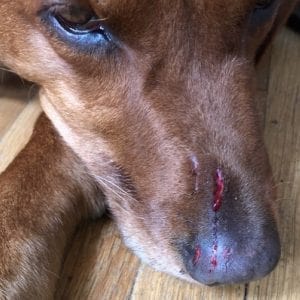
Why do vets clean wounds in dogs?
Wound cleaning is an extremely important step to help with wound healing. Some wounds will be closed with stitches to speed healing. Other wounds will be left open to heal due to their location, high levels of contamination, or not having enough skin to close.
The main goals of wound cleaning are to reduce contamination (including bacteria) and remove any foreign material or dead tissue.
You can learn more about wounds, including their causes, diagnosis, and treatment, in our full article here.
How do vets clean wounds in dogs?
Most wounds, including cuts, lacerations, and bite wounds, are cleaned by:
Adding a sterile lubricant to the wound to allow the hair to be clipped without further contamination.
Shaving the hair to allow easier access to the affected area.
An initial flushing of the wound.
Removing any foreign material or dead tissue.
Thorough flushing using sterile saline, chlorhexidine, or betadine solutions.
Stitching (suturing) the wound to close, if needed.
Applying any protective coverings or bandages (more common for open wounds).
Abscesses:
Lancing (cut-open) and any pus drained
Thorough cleaning and flushing
A drain may be used to allow extra fluid to be removed and prevent the wound closing too soon
How to prepare your dog for veterinary wound cleaning
Keep the wound as clean and dry as possible, and prevent your dog from licking at it.
Apply pressure if the wound is bleeding.
Do not apply any bandages at home, incorrect pressure can make wounds worse and cut off circulation.
If your dog needs sedation or a general anaesthetic (GA), they will likely need to be starved beforehand. Your vet will guide you on this.

Why your dog needs sedation/general anaesthesia (GA) for wound cleaning
Most wounds, especially those that need stitches or staples, will need sedation or GA for cleaning. This is important for several reasons:
To relax your dog if they get stressed or anxious at the vet clinic.
To keep your dog restrained. Allows for a more thorough cleaning and for any surgery (such as stitches) to be done.
Wound cleaning, stitches, or any other type of surgery are painful. Medications used for sedation or anaesthesia provide additional pain relief properties.
How much does it cost for veterinary wound cleaning?
The cost of wound cleaning can greatly vary depending on how severe the wound is, the type of practice (such as hospital or first opinion), and the area you are in.
Small, superficial wounds:
If no surgery or anaesthetic is required, then costs may start around £100 (on top of the initial consultation fee)
Wounds that need sedation/GA and surgery:
Sedation and GA costs include monitoring equipment, extra staff, and specific medication. Sedation itself often starts at around £100 or more, depending on how long the procedure lasts. General anaesthesia is often more complex so therefore more expensive.
Surgery prices will depend on what procedure is needed. This might involve straightforward stitches or be more complicated, involving drains, skin grafts, or flaps.
Other costs to consider:
Bandaging: may need multiple appointments to change and refresh
Pain relief and antibiotic medications
Imaging (x-rays, ultrasound) to check for damage elsewhere in the body
Swabbing of the wound for culture and sensitivity
Is veterinary wound cleaning safe for dogs?
Wound cleaning is generally a very safe procedure for dogs.
Potential minor risks include bleeding, wound breakdown, and infection.
If your dog needs sedation or a general anaesthetic for wound cleaning, your vet will discuss these risks with you. These procedures are considered safe for the majority of pets and vets will take steps to minimise any risk as much as possible.
How to help your dog after veterinary wound cleaning
Your vet will give you specific advice on how to care for your dog's wound, depending on its location and severity.
Keep the wound (and bandage) clean and dry at all times.
Check the wounds at least once a day for any signs of concern, such as discharge or swelling.
Prevent licking, biting, and scratching at the wound at all times. You can do this by using a buster collar, pet medical suit, or dog boot.
It is usually advised to reduce exercise until the wound is healed.
Gentle cleaning with saline may be advised if there is any discharge.
Give medications such as antibiotics or pain relief at the correct doses and times. Always complete the course.
Topical treatments such as manuka honey or antibacterial wound creams may be advised. Do not use these unless advised by a vet or vet nurse.
When you should be worried about wounds in dogs
Seek help from a vet immediately if:
Your dog has a large or deep wound
Your dog has a wound that won’t stop bleeding
Your dog’s wound is infected
Your dog is in pain with their wound
Call us and speak to one of our Joii vets if:
Your dog has a small cut or graze
Your dog has been bitten by another animal, and you are not sure what to do.
You need advice about keeping your dog mentally stimulated during rest periods.


