7 things to know about Labradors: fun facts, true tails, and key health concerns.


1 - Labradors are all-action, agile, enthusiastic working dogs
2 - Labradors have a double-layered Labrador coat
3: Labradors have 2 superpowers - an astounding sense of smell and an insatiable appetite!
4: Labradors are completely committed, all-terrain retrievers
5: Labradors can be prone to lumps
6: Keen-sighted Labradors are the most popular Guide-Dogs worldwide.
7: Labradors can be super intelligent canine superheroes, but are you right for them?
Products in this article


Explore our vet recommended products
Shop now
Labradors are playful, friendly, energetic dogs who love being around their people. But they can be expensive to care for and are prone to certain health issues. Always research breed-specific health risks before adopting a dog and stay alert for any signs of potential problems.
The Labrador/Labrador Retriever:
⦁ Average weight: 25–35 kg (medium/large breed)
⦁ Colours: Black, Yellow (including variants like Fox Red), Chocolate
⦁ Average life expectancy: 10-12+ years (slightly shorter for Chocolate Labradors)
⦁ Exercise requirements: minimum 1.5 to 2 hours per day.
⦁ Character: Loyal, dependable, intelligent, easy to train, courageous, even-tempered, and gentle.
Labradors have been our workmates and loyal companions for 500 years. They originally come from Newfoundland in Canada. But they got the name ‘Labradors’ when they came to the UK in the 1800’s.To many of us, Labradors are the ultimate ‘Man’s Best Friend’.

1 - Labradors are all-action, agile, enthusiastic working dogs
Fun Facts:
The earliest Labradors were St John's water dogs - a tough cross between Newfoundlands and smaller water dogs. Fishermen bred them to retrieve fish and nets from the freezing waters of the North Atlantic.
They’re still some of the toughest dogs around. Labradors are working in dangerous places and roles across the world; explosives and weapons detection, the war on illegal drugs, search and rescue.
True Tails:
Labradors Sadie, Treo, and Sashar saved countless lives detecting bombs and weapons with their human handlers in Afghanistan. All three received the Dickin Medal, the canine equivalent of the Victoria Cross.
Health issues: Stiffness, lameness, and arthritis
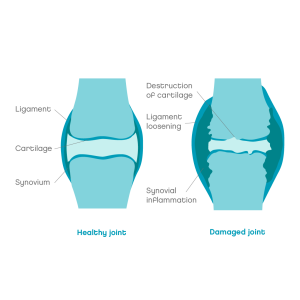
Labradors are three times more likely to develop arthritis, twice as likely to get stiffness and 1.6 times as likely to become lame compared to crossbreed dogs.
Common causes of stiffness and lameness include:
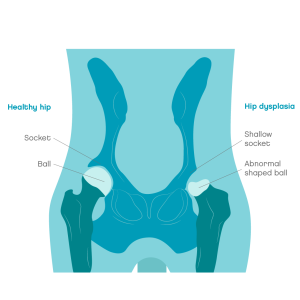
Hip dysplasia - An unstable poorly-fitting hip joint. Anywhere between 3 and 17% of Labradors have some degree of hip dysplasia on x-rays.
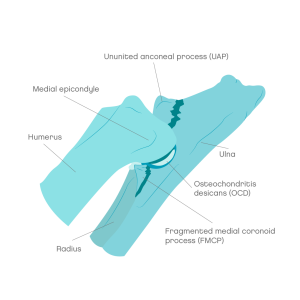
Elbow dysplasia - Abnormal growth and development of the elbow joint. It causes limping and pain in young dogs or arthritis in older dogs. Labradors are nearly 6 times more likely to get elbow dysplasia than crossbreeds.
Cruciate ligament disease - Labradors can tear ligaments in their stifles (knees) as they twist or turn- just like footballers. It causes instability in the joint. This requires an operation, but arthritis is inevitable in the long term.
What to do if your Labrador is limping:
It's important to completely rest your Labrador for 24 hours if they start limping. And this means strict rest! No walks, tuggy games, jumping on the sofa, or going upstairs. Call a vet if strict rest does not improve things after 24 hours.
How to minimise the risk of joint problems:
⦁ When buying a puppy, ensure the breeder has provided low hip and elbow scores for both parents.
⦁ Feed your puppy a balanced, healthy diet appropriate for their age and lifestyle.
⦁ It's important to maintain your dog's healthy weight and body condition score from the get-go. Learn how to check their body condition score - keeping weight off is easier than losing it.
⦁ Limit your Labrador puppy's exercise to two to three 15-minute walks on a lead until they're six months old. Then, gradually increase exercise until they're 11 months old. No ball launchers or mountain climbing until then!

2 - Labradors have a double-layered Labrador coat
Fun Facts:
Labradors have 2 layers to their coat. An outer coat of bristly short, straight hair to repel water. It can feel slightly oily to touch. And a soft undercoat for insulation.
Bonus - this makes Labradors ideally suited to cold and wet climates and perfectly at home in freezing water. Plus, Labradors have webbed feet, which makes them excellent swimmers.
Downside - they shed a lot. They moult twice yearly to change their winter and summer coats and shed daily. It's hard to believe how much hair just one dog can leave on the carpet without going bald.
True Tails:
Those canny Canadian settlers bred the perfect ‘fisherman’s friend’. But Labradors could also give David Hasselhoff a run for his money where their lifeguard skills are employed on beaches across the UK.
Health issues: common skin and ear conditions
Atopic dermatitis - Around 10% of Labradors suffer from allergic skin disease. The figure is highest in chocolate Labradors.
Hot spots - The thick coat of Labradors, combined with allergies, makes them prone to painful hot spots.
Otitis externa - Inflamed infected ears. Inflammation and infection flourish in a Labrador’s warm, airless ear canal. Especially if they swim a lot.
What to do if your Labrador shows signs of irritated skin or ears:
Always speak to a vet for advice. The sooner the problem can be identified and treated, the more effective treatment is likely to be.
How to minimise the risk of skin disease in your Labrador:
Feed a high quality diet, suitable for age and lifestyle.
Keep up-to-date with parasite preventive treatment.
Clean your Labrador’s ears regularly. Especially if they love swimming. Use a vet-recommended ear cleaner.
Only bath your Labrador if it’s essential for their health or your sense of smell. Their coat has natural oils that protect it. Overbathing can remove these oils and harm their skin. If your Labrador has itchy or irritated skin, we recommend Douxo Pyo shampoo and mousse.
3: Labradors have 2 superpowers - an astounding sense of smell and an insatiable appetite!
Fun Facts:
Labrador's sense of smell is 10000 times more sensitive than ours. They have 300 million smell receptors compared to our 6 million and can smell objects or people up to 20 km away. No wonder they make such great sniffer dogs! Labradors can even sniff out certain illnesses and cancers in people.
However, their legendary sense of smell is closely matched by their insatiable appetites. When you combine the two, you get a dog that is always on the lookout for food. In fact, 23% of Labradors have a genetic (inherited) problem that causes them to overeat. The "fullness" gene doesn't work properly. They’ll eat much more than they need. Often much more than is good for them!
True Tails:
Twin Labradors Lucky and Flo were trained to detect counterfeit goods. They were so effective that criminal gangs put a price on their heads!
Health issues: obesity and gastrointestinal problems
Around 60% of Labradors are overweight or obese. Obesity is a disease. Being very overweight is not about being ‘cuddly’ or ‘having extra padding’. Fat releases harmful chemical signals into the bloodstream. It causes damage and inflammation in other tissues and organs.
Dietary indiscretion - pets eating things they shouldn't! It may be something loosely termed ‘edible’ - human food, whole bags of pet food and bones. Or completely inedible and indigestible - toys, packaging, stones, socks, sticks, and corn cobs. Indiscretions can result in gastrointestinal problems, such as poisoning and intestinal blockages.
What to do if your Labrador is overweight:
Obesity is a severe and long-term health condition. However, we can manage its symptoms. Speak with a vet or vet nurse for guidance. They can recommend specialised prescription diets and provide ongoing care to control your pet's weight.
The experienced Joii vets and nurses are available 24/7 to offer advice and support regarding diet choices and weight management.
What to do if your dog has an upset tummy:
⦁ A few days of small bland meals will settle most upset tummies. Have a probiotic on hand for runny poo.
⦁ Talk to a vet as soon as possible if vomiting persists or worsens, especially if it contains blood.
⦁ Call a vet immediately if your Labrador eats something that could get stuck and cause a blockage or is in pain (restless, whining, lying in funny positions, tummy hard to touch).
Reduce the risk of your ever-hungry or over-playful Labrador eating something they shouldn't by keeping human foods, poisons, and household chemicals out of sight, smell, and reach of pets. Make sure to supervise playtime with new toys and promptly replace any broken or worn-out ones.

4: Labradors are completely committed, all-terrain retrievers
Fun Facts:
Labradors give it their all. Whether it’s pursuing a tennis ball or leading their blind owner down 70 floors of a collapsing building to safety.
True Tails:
On September 11, 2001, when one of the Twin Towers was hit by a plane, a guide dog named Salty helped his blind owner, Omar Riviera, make it down 70 floors to safety amidst the chaos. Despite Omar's attempt to set Salty free, the loyal dog refused to leave his human and stayed by his side until they were both safe.
Health concerns: Trauma (Accidents and injuries)
Labradors are naturally lively, inquisitive, and playful dogs, but their enthusiasm can lead to frequent and often painful injuries.
⦁ Cut pads and lacerations: Usually from broken bottles in rivers and on paths
⦁ Broken bones or damaged joints:
How to reduce the risk of injuries
⦁ Avoid walking in areas where litter and broken glass are likely, especially in the dark.
⦁ Be careful when throwing a ball and especially with ball launchers
⦁ Don't throw sticks for dogs. Stick and splinter injuries are very common, especially in their mouths or throats.
What to do if your Labrador is injured:
⦁ Call your nearest vet if your Labrador is in pain, unable to take weight on leg or if a joint looks misshapen.
⦁ Clean the affected area under running water to remove any glass shards and foreign particles. Apply firm pressure with a clean cotton pad or cloth to stop bleeding. Use a doggy-safe antiseptic if you have one.

5: Labradors can be prone to lumps
Labrador Retrievers can be trained to detect certain types of human cancer, however, the breed is also prone to developing lumps and bumps.
⦁ Lipomas - Lipomas are a common benign tumour in dogs, especially Labradors, accounting for 20% of cases. They are usually harmless unless they impede the dog's movement.
⦁ Cancer - Labradors are at a slightly higher risk for certain types of cancer, such as lymphomas, mast cell tumours, mammary tumours, and hemangiosarcoma’s.
What to do if you find a lump on your Labrador:
⦁ Play it safe. Call a vet for advice if you find a lump on your Labrador.
⦁ The good news is that most cancers are treatable, especially if caught early!
⦁ Losing weight can reduce the size and risk of lipomas on Labradors!

6: Keen-sighted Labradors are the most popular Guide-Dogs worldwide.
Fun Facts:
⦁ Most dogs have 20/75 vision, which means they need to be around 20 feet from an object to see it as clearly as a human standing 75 feet away. However, Labradors have remarkable eyesight and can see things more clearly, almost as well as humans with 20/20 vision.
⦁ 62% of Guide Dogs in training across the world in 2022 were Labradors.
True Tails:
Rochelle the Guide dog was another hero of 9/11. Her owner was also on one of the highest floors when the plane struck. She led him and 30 other people down 1,463 steps out of the collapsing tower. Once she got home, Rochelle immediately played with Linnie, her retired predecessor. Just as if nothing ‘out-of-the-ordinary’ had happened that day!
Health concerns: Eye conditions in Labradors
As a purebred dog, Labradors have a higher risk of inherited eye conditions:
⦁ Progressive retinal atrophy (PRA) - First signs may be your Labrador bumping into things at night. It eventually leads to complete blindness. Genetic screening and yearly eye checks for breeding Labradors mean fewer get PRA these days.
⦁ Entropion - Usually shows up while your Lab is still a puppy. One or both of their lower eyelids roll in towards the eye. The eyelashes rub on the cornea, causing pain and irritation.
⦁ Cataracts -when a lens becomes opaque instead of being see-through. The affected eye(s) will look cloudy or have a bluish-grey appearance. The result is gradual blindness.
What to do
Always call a vet if you’re worried about your Labrador’s eyes and eyesight.

7: Labradors can be super intelligent canine superheroes, but are you right for them?
Fun Fact:
Labradors are ranked as the 7th most intelligent dog breed out of 190 recognised in the USA.
Ok, collies may be smarter. But for calm trainability, devotion and gorgeous floppy ears, Labradors have the edge!
True Tails:
No account of Labradors would be complete without mention of Endal - winner of the Dickin Medal and the UK’s most famous assistance dog. Endel supported disabled ex-serviceman Allen Parton.
Endal could:
⦁ Load and unload a washing machine.
⦁ Operate buttons and switches.
⦁ Use chip and PIN ATM’s. Then return the card to his owner’s wallet.
⦁ Fetch items off supermarket shelves and get the newspaper.
⦁ Put his unconscious owner in the recovery position after he was knocked from his wheelchair by a car. Without ever being trained to do this!
Labradors - playful, devoted, active, inquisitive, and smart
Labradors require ample exercise as they are naturally active and energetic. As pet owners, it's our duty to provide them with everything they need to be healthy and content.
⦁ Labradors need at least 2 hours of high-quality exercise per day - running, playing with pals, fetching.
⦁ A couple of short ambles round the block each day is not enough.
Health concerns
Labradors who don't get the right amount of play or exercise risk:
⦁ Becoming bored and lethargic.
⦁ Gaining weight and getting joint problems.
⦁ Becoming highly strung and barking.
⦁ Chewing things and becoming destructive.
What to do for a healthy and happy Labrador
We can be best friends to man's bestest best friend by giving them:
⦁ Lots of exercise
⦁ A healthy diet
⦁ Mental stimulation
⦁ Our company
⦁ And our endless, unconditional adoration
How can anyone resist?


Last updated