Why Does My Dog Eat Poo? Causes, Advice and How to Stop It

When Eating Poo Could Be a Sign of a Medical Problem
Signs That Your Dog May Need a Veterinary Check
Is It Normal for Dogs to Eat Poo?
Behavioural Reasons Why Dogs Eat Poo
How Can I Stop My Dog Eating Poo?
Are there products to stop them eating poo?
When Should I Contact a Vet Urgently?
Need Advice About Your Dog?
Products in this article


Why Does My Dog Eat Poo? Causes, Advice and How to Stop It
If your dog eats poo, you’re certainly not alone. Although it’s not a habit, eating poo or ‘coprophagia’, is a common behavioural struggle in dogs. Often it is linked to behavioural causes such as stress, anxiety and boredom. However, it can also be linked to medical conditions and diet. In some specific situations, it can even be a normal behaviour.
The good news is that there are plenty of things you can do to help your dog stop eating poo. Understanding the reason behind your dog's behaviour is key to finding the best solution for the problem. In this guide, we look at the reasons why dogs eat poo, when you should speak to your vet, and practical ways to help stop the behaviour happening.
When Eating Poo Could Be a Sign of a Medical Problem
Coprophagia in dogs can be caused by medical problems, nutritional factors or behavioural issues. It can sometimes be a normal behaviour. Although eating poo is commonly a behavioural issue, it is important to consider whether there could be an underlying medical cause, particularly if the behaviour is new or has suddenly increased.
Endocrine conditions
Some medical conditions can make dogs feel hungrier. For example, endocrine diseases such as diabetes and Cushing's disease. With these diseases, dogs will usually show other symptoms too, including drinking and peeing more and weight changes.
If your dog is constantly hungry and has started eating poo, particularly alongside weight loss or other changes in their health, it is important to arrange a veterinary check. Your vet can advise whether tests are needed.
Digestive Diseases
Digestive and intestinal diseases can interfere with the way your dog digests their food and absorbs nutrients. These diseases often present with symptoms such as changes in appetite, loose stools, changes in stool colour, vomiting, and weight loss. Examples include IBD (inflammatory bowel disease) and Exocrine Pancreatic Insufficiency. These conditions cause gut maldigestion or malabsorption, meaning your dog can’t absorb the nutrients they need from their food. This can potentially lead to increased hunger or unusual eating behaviours.
Another common cause of increased hunger, weight loss and stool changes is intestinal worms. These include roundworms and tapeworms. Roundworms can be seen as spaghetti-like worms in faeces or vomit, and tapeworms look like rice grains. Although you won’t always see the worms, other signs may include vomiting, diarrhoea, scooting or licking around the back end. Speak to a vet for advice on deworming if you have noticed worms. It’s important to regularly deworm your dog anyway if they are eating poo to prevent worm infections.
Changes to Diet or Feeding Routine
A change in food or feeding routine could also contribute to the problem. If a dog's nutritional needs aren't being met, or their feeding routine isn’t giving them adequate enrichment, they may experience increased hunger or boredom. This can result in scavenging behaviours, including eating poo.
It's important to make sure your dog's diet is complete, balanced and appropriate for their age, size and lifestyle. If you're unsure whether your dog's diet is suitable, speak to a vet or vet nurse for advice.
Signs That Your Dog May Need a Veterinary Check
With all behaviour changes, it’s important to speak to a vet to rule out medical issues first. It’s especially important to speak to a vet if you have noticed symptoms including:
Vomiting
Diarrhoea
Increased hunger or appetite
Weight loss
Worms in your dog's poo
Drinking or peeing more
Other sudden changes in health or behaviour
A vet can examine your dog and recommend any tests to rule out medical conditions that could be causing the symptoms. You can speak to our online Joii vets for advice with this.
Is It Normal for Dogs to Eat Poo?
Although unpleasant, eating poo can be a normal behaviour in some circumstances.
Mother Dogs Eating Their Puppies' Poo
Mother dogs will naturally eat their puppies' poo when caring for their newborn litter. This helps keep the nesting area clean and is a normal maternal behaviour.
Dogs Eating Cat Poo
Cat faeces can be particularly attractive to dogs due to their strong odour and taste. To a dog, the litter tray may seem like a convenient snack bar. However this behaviour can again be linked to increased hunger, scavenging behaviour and boredom.
Preventing access to cat litter trays and cleaning up cat poo promptly can help reduce this behaviour.
Behavioural Reasons Why Dogs Eat Poo
If your dog has been checked by a vet and there are no medical concerns, the next step is to look at environmental and behavioural causes. Behavioural causes such as boredom, anxiety and attention-seeking are often the causes of eating poo.
A vet can refer you to a qualified behaviourist who can help work through the issue and make a plan to transform the behaviour. Qualified behaviourists can also be found on the ABTC or FAB websites. Speak to our Joii team for support with this.
Boredom
Dogs need plenty of physical exercise and mental stimulation. If a dog doesn't have enough to do, they may develop unwanted behaviours, including scavenging and eating poo.
It’s important that dogs have enough exercise, rest and mental stimulation throughout the day to suit their age and breed. Sleep and calm time are also essential for reducing unwanted behaviours.
Anxiety and Stress
Stress and anxiety are emotional causes for many unwanted behaviours including aggression and reactivity, separation behaviours, chewing and eating things they shouldn’t.
Common signs of anxiety and stress include shaking, trembling, restlessness, being more vocal, panting, toileting indoors, aggression and destructive behaviour. Body language changes can include dilated pupils, ears back, tail tucked and tense posture.
There are many triggers for stress and anxiety, including pain, changes in environment, stressful events, being worried when left alone, fear of noises, people, dogs or other triggers, or being over-aroused by certain triggers.
Attention-Seeking
Dogs quickly learn that certain behaviours get a reaction from their owners and can get into habits. Try to avoid any punishment for the behaviour and instead distract and reward calm, positive behaviour.
Could There Be Other Behavioural Issues?
With emotional causes of eating poo, there are often other behavioural signs such as:
Reactivity or aggression towards people or other dogs
Separation issues
Noise reactivity or other fears
General anxiety
Over-arousal, excitability or struggling to calm down
Barking or excessive vocalising
Toileting issues
In these situations, eating poo may not be the main issue. Working through the other behaviour issues with a vet and qualified behaviourist is important to gain long-term success.
How Can I Stop My Dog Eating Poo?
There are several practical first steps you can take to reduce your dog's opportunity and motivation to eat poo.
Pick Up Poo and Clean Around Your Dog's Mouth
Clean up poo as soon as you can so your dog has less opportunity to eat it.
If your dog is eating poo on walks, keep them on a lead or keep a close eye on them. Calmly move them away from faeces with a treat reward.
If your dog has eaten poo, clean around their mouth afterwards with pet-friendly wipes. Avoid allowing your dog to lick you, especially your face, or children.
Check Your Dog's Diet and Worming
Make sure your dog's food is complete and nutritionally balanced for their age, breed and lifestyle. Check that your dog's deworming product, dose and frequency are appropriate for their age, size and lifestyle.
Our Joii vets can help assess your dog's diet and nutritional requirements, and give advice on the most suitable worming regime for your dog.
Avoid Punishment and Instead Use Positive Distraction
Avoid punishing your dog as this can make stress, anxiety and behaviour issues worse. Ignore any unwanted behaviour and instead reward calm behaviours with treats and a calm marker word.
Change How You Feed Your Dog to Provide Mental Stimulation
How you feed your dog can be just as important as what you feed them. It’s important to tailor this to their age and energy levels. For example, young adult dogs will generally need more exercise and mental stimulation than elderly dogs.
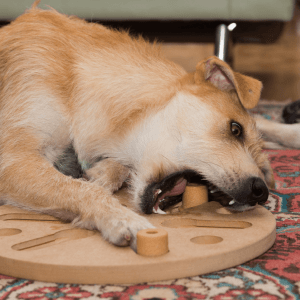
Instead of providing all their food in a bowl at one or two meals, spread their food allowance over the day with fun activities. This will encourage natural foraging behaviour, reduce boredom and encourage calm, positive neurochemicals in their brain.
Enriching feeding activities include:
Scatter feeding
Food puzzle toys and buster cubes
Food-stuffed Kongs
Hiding food and treats around the garden
Training and games
Remember to choose appropriate toys for your dog's size and chew strength.
Promote Calm Behaviour
Encouraging your dog to feel calm is the key to reducing many unwanted behaviours. Most dogs need up to 18 hours of sleep a day to help them decompress and stop them becoming overwhelmed and stressed. Making sure they have a cosy, quiet area to rest undisturbed throughout the day can help. Reducing exposure to things that trigger reactive or stressful behaviour is also a good start. For example, if your dog barks at the door, stop access to doors and windows so they aren’t triggered so much over the day.
Are there products to stop them eating poo?
Once your dog has been checked by a vet and medical causes have been ruled out, products may be considered as part of a management plan alongside advice from a qualified behaviourist.
Coprostop can be added to the food to make stools less palatable. It can be used alongside practical management strategies such as preventing access to poo, improving enrichment and addressing the underlying reason for the behaviour.
When Should I Contact a Vet Urgently?
While poo eating itself is not usually an emergency, you should seek urgent veterinary advice if your dog shows signs of being unwell, including:
Weak, wobbly or struggling to move
Swollen or bloated tummy
Pain such as tense, hunched or unable to get comfortable
Repeated vomiting or diarrhoea
Lethargic and not eating
These symptoms could indicate a serious underlying problem that needs urgent veterinary attention.
Need Advice About Your Dog?
If you're worried about your dog's health or behaviour, speaking to a veterinary professional is a good place to start.
Our online Joii vets are available 24 hours a day to provide veterinary advice and help you decide what to do next. They can also refer you to a qualified behaviourist for advice.
Remember, the key to stopping a dog from eating poo is to look at the whole picture. Rule out medical causes, make sure their nutritional needs are being met, reduce their access to poo, provide mental stimulation and calm activities, and consider what other behavioural issues could be contributing.
With the right approach, many dogs can learn that there are much better things to put in their mouths!