


5 Signs of Phantom Pregnancy in Dogs

What is phantom pregnancy
Signs
When does phantom pregnancy occur
How to help at home
When to contact a vet
Prevention
Conclusion
Products in this article

5 Signs of Phantom Pregnancy in Dogs
Phantom pregnancies in dogs are a commonly seen physiological response due to their reproductive cycle. While most cases are mild and settle without medication, genuine pregnancy and illnesses such as mastitis or pyometra can sometimes cause overlapping signs.
Here we look into what this condition is and what the common signs are of it, along with how owners can help their dogs at home and when veterinary care should be sought out.
What is a phantom pregnancy in dogs?
Phantom pregnancies can also be called false pregnancies or pseudopregnancies.
During their reproductive cycle, after ovulation, an un-spayed female dog produces progesterone. This happens whether she is pregnant or not.
As progesterone later decreases, another hormone, prolactin, is triggered. Prolactin is the hormone responsible for milk production and pregnancy changes, including maternal instincts.
In dogs that develop phantom pregnancy, these hormonal influences can cause them to go through these changes without actually being pregnant.
These changes aren’t your dog pretending or imagining she’s pregnant, the hormonal changes lead to physical changes too. Mating is not required for this response to occur, and any cycling female dog can be affected. While some dogs show few to no signs, others can develop convincing physical and behavioural signs of pregnancy.
Signs of phantom pregnancy in a dog
Not every dog develops all signs, and they are often seen in combination. Five main signs to look for are as follows:
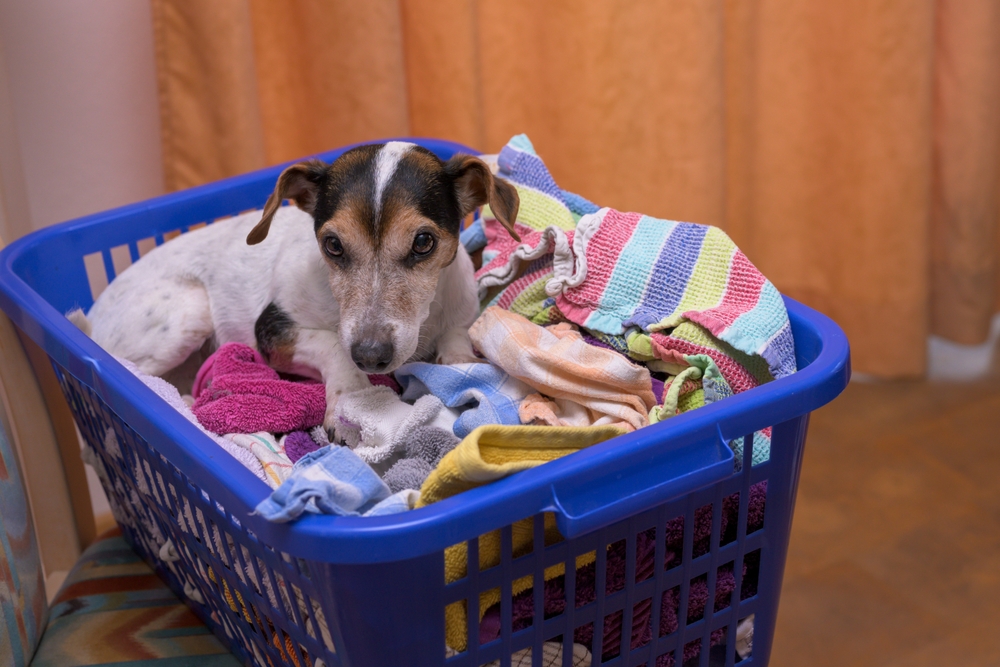
Nesting behaviour
Dogs may try to build themselves a nest by collecting blankets, digging at their bedding, seeking enclosed spaces or repeatedly preparing a particular resting area.
Mothering toys
Some dogs will start paying more attention to their toys, particularly cuddly soft toys and treating them as they would puppies. They may carry, groom or lay with the toys. They may start guarding their toys and become distressed when separated from them.
Changes in temperament
Some dogs become restless, seek reassurance, and want to be beside their people more. Whining can occur without obvious cause, and they may seem generally unsettled.
Other dogs can start to hide away and display unusually irritable behaviour. They may guard their bed, adopted objects or personal space and may even show aggression when feeling cornered. It is important to not confront a dog in this position or punish her, as this can cause more confusion for her and even worsen the problem.
Mammary gland changes
Dogs going through a phantom pregnancy can have enlarged mammary glands. There may be symmetrical swelling around and under the teats and more prominent nipples. They can even start producing milk and lactating. The milk may be milky or clear-to-brown in colour. Hold off on any tummy rubs or pressing the mammary glands, as stimulation can prolong milk production.
Physical changes
Dogs can have non-specific signs such as a reduced appetite, lower energy and weight changes during a phantom pregnancy. They can even start to appear pregnant with a rounded-looking tummy.

Signs of phantom pregnancy are commonly noticed around six to eight weeks after a season, although timing and severity vary. Most mild cases resolve by themselves in approximately 2-3 weeks, but signs involving milk production or repeatedly stimulated maternal behaviour may take longer to disappear.
Please seek veterinary care if concerned about your dog's behaviour or changes, or if any of the following occurs:
Symptoms are not starting to improve
Symptoms extend beyond 2-3 weeks
Large amounts of milk are produced
They appear distressed, painful or unwell
Timing does not fit with a recent season
How to help a dog through a phantom pregnancy
Use gentle distraction and enrichment
It is fine and encouraged to go for normal walks, or even increase exercise outside. Keeping them distracted and busy can help reduce symptoms. Use puzzle games, sniffing activities and calm play if your dog feels well enough. The aim is to redirect her attention without forcing interaction.
Manage toys without confrontation
If mothering toys is intensifying distress or causing guarding behaviour to occur, remove them quietly while your dog is safely elsewhere or pleasantly occupied. Do not forcibly take a guarded object or punish maternal behaviour. Seek veterinary or qualified behavioural help if there is a bite risk.
Avoid mammary gland stimulation
Do not massage, give tummy rubs or repeatedly touch the area if the mammary glands are swollen. As this can cause milk production to continue, lengthening the duration of symptoms. If milk production persists longer than 2-3 weeks, make an appointment with your vet for further examination.
When to contact a vet
Prompt veterinary advice should be sought if your dog has hot, red, hard or painful mammary glands, as mastitis can develop.
Excessive thirst, vomiting, lethargy, swollen tummy, or vaginal discharge after a season may indicate a pyometra (infected uterus) rather than a phantom pregnancy. This is a potentially life-threatening illness that can occur after a season and requires urgent treatment.
If your dog’s phantom pregnancy goes beyond the normal time frame, or if there are complications such as mastitis, your vets may prescribe medication to help lessen milk production and maternal behaviour.
If you are unsure whether your dog’s change in behaviour or symptoms fit a phantom pregnancy, a Joii vet can assess her symptoms and advise whether she needs an in-person examination.
Phantom pregnancy prevention
Spaying a dog prevents the hormonal cycles responsible for phantom pregnancies, and if your dog has had a phantom pregnancy they are more prone to them in the future. However spaying does not immediately stop an episode already underway.
For this reason, elective neutering surgery is generally planned once the current physical and behavioural signs have all resolved (once any milk production and mammary enlargement have stopped and your dog has reached an appropriate stage of her reproductive cycle). If the surgery is done while progesterone is still influential, it can cause a sudden hormonal change and trigger or prolong phantom pregnancy signs.
Conclusion
A phantom pregnancy can look convincing, but there is help available. It can be confusing for both the dog and their owner, but fortunately most mild episodes resolve naturally within a few weeks.
Calm distraction, avoiding mammary stimulation and carefully managing any mothered toys can help while her hormones return to their resting phase.
However do not assume that every change after a season is harmless. Painful mammary glands, illness, vaginal discharge, significant tummy swelling or severe behavioural changes need veterinary care. If episodes affect your dog's welfare, talk to your vet about treatment options and look into the most appropriate time to consider spaying.


