


Ear infections in cats

Overview
Symptoms
Risk
Diagnosis
Vet treatment
Home treatment
Vet recommended products
Prevention
When to worry

Ear infections in cats
Ear infections in cats are less common than in dogs. Ear problems can have a range of causes, including ear mites, allergies and other conditions. Treatment depends on the underlying cause, and ear problems may come back frequently if this is not addressed.
Ear infections can affect different parts of the ear. Inflammation of the external ear canal is called otitis externa. This is a common type of ear problem in cats. Cats with allergies or certain ear shapes may be more prone to ear problems. Ear mites can also cause otitis externa and are especially common in kittens.
What are ear infections in cats?
Ear infections in cats are a common problem:
Ear infections can develop when the normal balance of microorganisms in the ear is disrupted.
They can occur alongside underlying problems like allergies, ear mites, or irritation from a foreign body such as a grass seed.
Symptoms can appear suddenly or over the course of a few days.
Ear infections are generally easier to treat if identified early. Length of treatment depends on the cause and severity, some infections may take weeks to clear.
Long-standing or recurrent inflammation can cause the ear canals to become thickened and narrowed. Treatment is more difficult if this happens.
If the underlying cause is not controlled, ear infections can come back frequently.
Cats of any age or breed can develop an ear infection, although some are more prone to them.
Ear infections in cats are usually easier to treat if caught quickly. However, they can worsen and lead to severe pain. Speak to one of our Joii vets as soon as possible if your cat has any ear problems.
In this article, we discuss the most common type of ear problem, otitis externa. Follow the links to find out about ear mites, otitis media and otitis interna.
Symptoms of ear infections in cats
Common signs of ear infections in cats include:
Head shaking or scratching at their ears
Brown, red, yellow or black discharge in the ears
Redness or swelling inside the ear canal
A bad or unusual smell from the ears
Sores, scabs or scratches around the ears
Pain or sensitivity when the ears are touched
A change in the position of the ear, such as flattening it
Prolonged infections can lead to thickening and narrowing of the canal
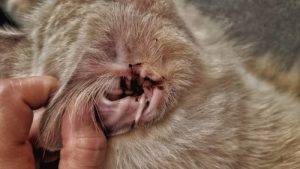
If left untreated, constant head shaking can lead to an aural haematoma.
Are some cats more at risk of ear infections than others?
Any cat, regardless of age or breed, can develop an ear infection. Some cats may be more prone to ear problems because of their ear shape or anatomy.
Other factors that can contribute to ear infections include:
Excessive or inappropriate ear cleaning, which can irritate the ear canal
Underlying skin disease or allergies
Ear mites, particularly in kittens
Conditions that affect the immune system, which may make some cats more susceptible to infection
How are ear infections diagnosed in cats?
For first-time infections:
A physical examination, including looking into the ear canal with an otoscope, may be all that is needed.
Your vet may take a swab from the ear and examine it under a microscope (cytology). This can show whether yeast, bacteria or inflammatory cells are present and help guide treatment.
For recurring or severe infections:
Your vet may recommend a more thorough ear examination and ear flush under sedation or anaesthesia, especially if the ear is very painful or blocked.
Your vet may recommend bacterial culture and antibiotic sensitivity testing, particularly if previous treatment has not worked.
Imaging, such as X-rays, MRI or CT, may be recommended to investigate ear growths, polyps, or problems affecting the middle or inner ear.
What’s the treatment for ear infections in cats?
Many cases of ear infections in cats are treated with ear cleaners and/or medicated ear drops, depending on the underlying cause.
Ear cleaners can help remove wax, debris and discharge from the ear canal. Keeping the ear clean can also help prescribed medicated drops reach the affected areas. Only use an ear cleaner recommended by your vet.
Ear drops come in different formulations and may need to be given daily or at other intervals, depending on the product and the severity of the infection. They may contain antibiotics, antifungal medication, anti-inflammatory medication, or a combination of these.
Other treatments may include:
Ear wipes
Skin supplements
Antiparasitic treatment if ear mites are present
Anti-itch medication: especially if underlying allergies are suspected
Surgery: for example to remove a polyp
Antibiotics are not needed for every ear infection. Your vet may examine a sample from the ear to check for bacteria and yeast before deciding which treatment is appropriate. Where possible, antibiotics are used only when they are needed, as unnecessary use can contribute to antibiotic resistance.
How to help your cat with an ear infection at home
Use any medication exactly as advised by your vet. Don’t skip doses. If you are struggling to apply ear drops or cleaners, let your vet know right away. An alternative treatment, such as a longer-acting ear medication, may be an option in some cases.
Read our article that explains how to apply ear drops at home.
Check your cat's ears regularly. If the symptoms are getting worse or are not improving with treatment, speak to your vet as soon as possible.
A protective collar is a temporary measure to help prevent your cat from scratching and causing further damage to the skin around their ears.
If allergies are contributing to your cat's ear problems, your vet may recommend an appropriate diet or other allergy treatment.
Some mild cases of otitis may be managed with an appropriate medicated ear cleaner, depending on the underlying cause. Speak to a Joii vet for advice on the most appropriate treatment for your cat.
Tips on how to live with a cat with recurrent ear infections
Ear infections are often linked to an underlying problem, such as allergies. Treating the underlying cause can help reduce the risk of ear infections coming back and, in some cats, may prevent them from recurring.
Allergies can be investigated by:
Doing a strict diet trial with a hydrolysed or appropriate novel protein diet for at least 8 weeks
Making sure your cat is on regular parasite preventative
Allergy testing may be considered if environmental allergies are suspected
Vet recommended products


Tips on how to prevent ear infections in cats
Speak to a vet as soon as symptoms of an ear problem appear. Ear disease is generally easier to manage before it becomes chronic or leads to complications.
Use appropriate parasite prevention. Your vet can advise which products are appropriate for your cat.
Avoid unnecessary ear cleaning. Healthy cats generally do not need their ears regularly cleaned. Excessive or inappropriate cleaning can irritate the ear canal. If your cat is prone to ear problems, your vet can advise whether regular cleaning is appropriate and which ear cleaner to use.
Keep your cat's ears dry and avoid putting anything into the ear canal unless advised by your vet. This includes cotton buds, which can irritate the ear or push debris further into the canal.
Is my family at risk of catching an ear infection from my cat?
Ear infections do not spread between cats or from cats to humans.
When should you be worried about ear infections in cats?
Seek help from a vet if:
Your cat's ears are swollen or painful
Your cat has a head tilt or is off balance
Your cat's ear infection is not clearing with treatment
Your cat has yellow or green discharge in their ears
Speak to one of our Joii vets if:
Your cat has dirty ears
You need any advice about ear cleaning and what to use
You suspect your cat may have an underlying allergy
You would like advice about appropriate food for your cat with ear problems


