


Essential Oil Toxicity in Dogs

Overview
Symptoms
Risk
Diagnosis
Vet treatment
Home treatment
Prevention
Recommended products
When to worry

Essential Oil Toxicity in Dogs
Essential oil toxicity in dogs is becoming more common in UK homes, as aromatherapy, scented products and “natural” remedies become increasingly popular. While dogs are generally less sensitive than cats, some essential oils can still cause serious poisoning.
Dogs are vulnerable to essential oil toxicity for three key reasons. Firstly, essential oils are concentrated chemicals that can overwhelm your dog’s ability to process them safely. Secondly, dogs use their noses and mouths to explore the world. So they're more likely to sniff, spill or lick anything new or "interesting". Finally, dogs can accidentally ingest oils when they lick their fur, paws, the floor or their owner’s skin. Build-up of toxins can affect your dog’s nervous system, airways, liver, skin or digestive tract. Talk to a vet without delay if you think your dog may be at risk. With early recognition and prompt veterinary care, most dogs will fully recover in 2-3 days.
What is essential oil toxicity in dogs?
Essential oils are concentrated plant extracts made from leaves, flowers, bark and resins. They’re often used in diffusers, candles, room sprays, cleaning products, cosmetics and aromatherapy oils. Although dogs can cope with essential oils better than cats can, many are still risky for them. Especially when oil is used undiluted, applied directly to your dog’s skin or fur, or if it’s used repeatedly in a confined space.

How dogs get essential oil toxicity
Breathing in oils from diffusers, candles or sprays
Licking their fur or paws after oil spills or direct application
Skin contact when walking on treated surfaces
Swallowing oils from open bottles or soaked items
Licking their owner’s hands or skin when they have essential oil residues on them
Popular essential oils and risks
Highest risk oils: oils most likely to cause poisoning and serious illness:
Pennyroyal
Wormwood
Tea tree (Melaleuca)
Peppermint
Bitter almond
Thuja (a type of conifer)
Mustard
Wintergreen
Pine
Moderate risk oils: often thought of as “gentler” options, but still a risk for dogs:
Clove/Bay leaf
Oregano/Thyme
Camphor
Lower risk oils: Less likely to cause severe poisoning, but use with caution
Citrus oils (d-Limonene)
Common uses of essential oils
Flea/tick control: Citrus oils and pennyroyal are sold as "natural" parasiticides in shampoos and dips.
Household cleaners: Pine oil and citrus extracts.
Liquid potpourri/diffusers: Often contain essential oils and cationic detergents.
Aromatherapy: Diffusers, ointments and gels marketed as ”natural options” to support mental wellbeing and treat common ailments.
As well as the risks from essential oils themselves, liquid potpourri products often contain additional chemicals called cationic detergents to help oils mix with water. These can be very irritating or corrosive, causing burns to your dog’s mouth, throat, skin or eyes if licked or spilled.

Symptoms of essential oil toxicity in dogs
Once inside the body, essential oils can affect a dog’s nervous system, lungs, gut, skin and liver. Symptoms vary depending on the oil, amount and how the dog was exposed.
Common signs include:
Drooling or mouth irritation
Weakness, wobbliness or looking “drunk”
Tremors, twitching or seizures
Restlessness or unusual behaviour
Red, sore skin or chemical burns
Call a vet straight away if your dog shows any of these signs after contact with essential oils.
Are some dogs more at risk of essential oil toxicity?
All dogs can be affected, but there are some factors that increase risk:
Small dogs: smaller bodies mean relatively smaller quantities of essential oil can be toxic
Puppies: have fewer body reserves, and they are naturally playful and curious (a recipe for trouble!)
Older dogs: fewer body reserves and a greater likelihood of pre-existing illness
Dogs with existing illnesses, especially liver disease, have reduced tolerance to toxins
Dogs with existing breathing problems
Dogs kept indoors for prolonged periods, in confined spaces with scented diffusers
How do vets diagnose essential oil toxicity in dogs?
Vets usually diagnose essential oil toxicity based on the report of suspected exposure and a full physical examination. The vet will ask about the oil used, how much there was and how your dog was exposed. They’ll check for any distinctive smell of the oils on your dog's coat or breath.
Further tests include:
Blood tests: checking general organ health, organ function, and evidence of inflammation or anaemia
Urine tests: checking urine concentration and kidney function
Oxygen levels: monitoring your dog’s oxygen levels if their breathing is affected
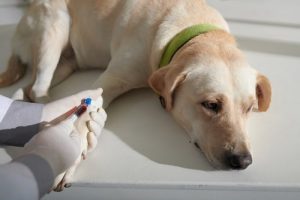
How do vets treat dogs with essential oil toxicity?
Treatment depends on the oil involved and how unwell your dog is. Early treatment helps prevent lasting damage.
Decontamination
Gently washing or wiping oils off the coat
Clipping fur if heavily contaminated
Using a cone collar to prevent your dog from licking anything off their coat
Gastrointestinal decontamination: giving activated charcoal by mouth to bind toxins in the gut and reduce absorption
Vets don’t usually make your dog vomit to empty their tummy. Essential oils can be extremely caustic, so inducing vomiting would lead to further throat and gullet burns. It also risks causing severe lung damage and pneumonia from aspiration.
Hospital treatment may include:
Intravenous fluids to support your dog’s circulation and organs
Anti-sickness injections
Medication to control tremors or seizures
Oxygen therapy
Liver support if needed
Warming and general supportive care
Severe cases
Intravenous lipid emulsion (ILE): Injected into your dog’s bloodstream, which acts like a ‘trap’ to catch and remove fat-soluble poisons, including toxic oils, from vital organs.
Most dogs recover well with the right care, especially when treatment starts early.
How to support a dog with essential oil toxicity at home
Always speak to a vet first, even if signs seem mild.
Give prescribed medication as directed, at the correct time and dose
Remove all remaining risks for further exposure
Make sure your home is well-ventilated
Use a cone collar to stop your dog from licking any contaminated fur
Keep them warm, calm and rested
If advised by the vet, offer small, frequent drinks of water and light, bland food in regular, small meals.
Keep a close eye on your dog’s behaviour, their appetite and their breathing
Tips on how to prevent essential oil toxicity in dogs
Avoid using diffusers in closed rooms
Store essential oils well out of reach
Choose pet-safe cleaning products
Wash your hands carefully after using oils on yourself or someone else
Never apply essential oils directly to your dog
Remember: “natural” is not the same as “safe
Are there safe or beneficial essential oils for dogs?
Some essential oils are suggested as part of a behavioural support/modification plan for dogs. However, their benefits may be limited and incorrect use could be harmful. Where they are used, they should be cautiously, for short periods and strictly under guidance from a vet.
Essential oils that may be helpful for dogs (with care):
Lavender: may help some dogs feel calmer and more relaxed, including during travel or in stressful environments (kennels or vets).
Chamomile: often used with lavender, may promote rest and reduce vocalising.
Vanilla, valerian, coconut and ginger scents: linked to calmer behaviour in some dogs.
Citrus extracts: used in some natural remedies for skin care in dogs
Important safety note
“Natural” does not mean safe: many essential oils can cause poisoning if they’re used incorrectly.
Cats are far more sensitive than dogs, so products used around dogs may put their feline housemates at risk.
Problems usually happen when oils are too concentrated, overused, or given without veterinary guidance.
Our vet recommendations for safe calming products


When to worry
Seek urgent help from a vet if your dog:
Collapsed or unresponsive
Struggling to breathe
Is vomiting or drooling repeatedly
Seems weak, wobbly or confused
Has tremors or seizures
Joii can help with:
Safe alternative products for bathing and behaviour support in dogs
Caring for dogs in recovery
Managing mild symptoms at home


