


Bee and wasp stings in dogs

Overview
Symptoms
Risk
Diagnosis
Vet Treatment
Home treatment
Prevention
When to worry

Bee and wasp stings in dogs
Bee and wasp stings in dogs are fairly common in the warmer months, from spring to autumn. Luckily, the majority of stings only cause mild swelling and irritation. Bee and wasp stings are also known as hymenoptera stings.
Serious reactions are rare but they can be life-threatening. Signs of a serious reaction include vomiting, excessive swelling, and breathing difficulties; these need emergency treatment.
What is a bee or wasp sting in dogs?
When a bee or wasp stings an animal, they inject their venom into the skin. This venom is the cause of the symptoms that develop.
Most stings only cause mild reactions, like swelling of the skin and local irritation. These can often be treated at home.
The symptoms of a sting should clear within 24–48 hours.
Rarely, dogs can develop an anaphylactic reaction. This can be more common with a sting in the mouth or multiple stings. Anaphylactic reactions usually happen within 30–60 minutes but can also occur hours after the sting. These need emergency treatment.
If your dog accidentally swallows a bee or wasp, don’t panic. The stomach acids help protect them. Mild vomiting and diarrhoea might develop.
Bees leave their stings in the skin, wasps don’t.
Bee and wasp stings can lead to local irritation and swelling, which can usually be treated at home. Rarely, severe reactions can occur. Our Joii vets are available 24 hours a day; call us now if you have any concerns.

Symptoms of bee and wasp stings in dogs
The most common signs of bee and wasp stings are:
Swelling of the affected area
Irritation: biting, licking or rubbing the affected area
Crying or whining
Limping: if they are stung on the leg
Hives
Drooling
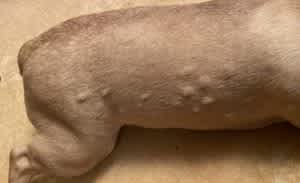
Signs of an anaphylactic reaction include vomiting, breathing difficulties, excessive drooling, collapse and seizures. Reactions like this will need emergency treatment.
Are some dogs more at risk of bee and wasp stings than others?
Bee and wasp stings can affect any dog, regardless of age, breed or lifestyle. Puppies and younger dogs tend to be more commonly affected, as they are naturally very curious.
How are bee and wasp stings diagnosed in dogs?
Usually, veterinarians diagnose bee and wasp stings by observing the signs exhibited by your dog. Typically, no further tests are required unless your dog's symptoms persist for a few days or suddenly worsen.
What’s the vet treatment for bee and wasp stings in dogs?
Mild reactions that are causing excessive irritation may need the following:
Anti-histamines
Anti-inflammatory medication, such as steroids
Anaphylactic reactions are serious and life-threatening; treatment involves:
Fluids via a drip
Placing a tube to help with breathing
Emergency medications to stabilise and treat abnormalities in blood pressure, breathing and other vital functions
Hospitalisation and monitoring for a minimum of 2-3 days
How to look after a dog with a bee or wasp sting at home
If a bee or wasp has stung your dog, try to remain calm and follow these steps:
If possible, remove any stings (bee) by scraping with a straight-edged object; avoid squeezing
Apply baking soda with water to the affected area if your dog was stung by a bee
Apply vinegar to the affected area if your dog was stung by a wasp
Use a cold compress for 10–15 minutes to reduce swelling
Allow your dog to rest and monitor for any other symptoms for the next 24 hours
Tips on how to prevent bee or wasp stings in dogs
It’s not always possible to prevent stings in dogs. Try to monitor your dog when outdoors during the high-risk months and avoid areas with large populations of bees or wasps.
When to worry about bee and wasp stings in dogs
Seek help from a vet immediately if your dog:
Is collapsed or having seizures
Is extremely irritated by a sting
Has been stung in the mouth, or stung multiple times
Has excessive drooling or swelling around the face after a sting
Call us and speak to one of our Joii vets if your dog
Has been stung and you would like advice
Has vomiting and diarrhoea after a sting


