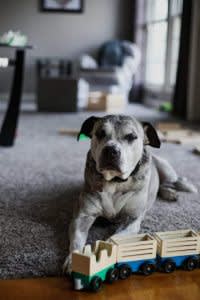
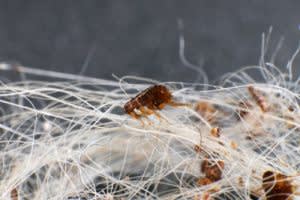
Overgrooming in dogs refers to excessive licking, chewing or biting of their own body, which can lead to skin irritation, hair loss and sores. It can be caused by medical conditions, behavioural issues or a combination of both. Overgrooming is rarely life-threatening, but it’s important to identify and address the underlying cause to prevent further skin damage.
Overgrooming is less common in dogs than in cats. Dogs are more likely to show signs of itching by scratching, licking or chewing, particularly their paws. It’s also important to distinguish self-inflicted hair loss from spontaneous hair loss, which can be caused by hormonal disorders and other medical conditions.
What to do if your dog is overgrooming
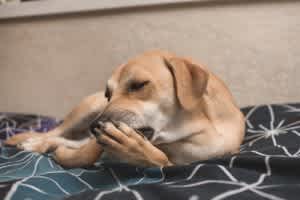
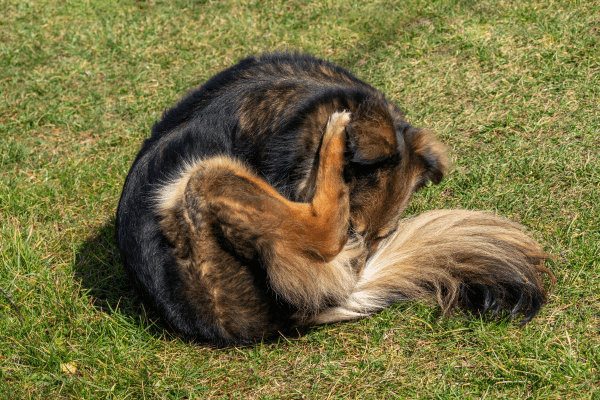
Dogs may lick themselves as part of normal grooming. However, frequent or persistent licking, chewing or biting, particularly in one area, may indicate an underlying problem. This can lead to skin irritation, hair loss and sores.
If you suspect your dog is overgrooming, we recommend:
Monitoring your dog for other symptoms, such as reduced appetite or diarrhoea.
Checking their skin and fur where they are licking for redness, hair loss, sores or other abnormalities.
Checking other pets in the household for similar signs, as some causes, such as fleas or certain skin infections, can affect multiple animals.
Identifying the cause of your dog's overgrooming can be challenging. A vet can examine the affected area and help determine whether the cause is medical, behavioural or a combination of both. Early treatment can help prevent further skin damage.
Joii vets are available 24/7 to provide expert advice.
Common causes of overgrooming in dogs
Common causes of overgrooming are often associated with itching or pain and include:
Parasites: Fleas and mites can cause itching and irritation. Some skin conditions, such as ringworm, can also cause hair loss and skin changes.
Allergies: Dogs may react to flea bites, food ingredients or environmental allergens, leading to itching and excessive licking.
Foreign objects: Objects such as a grass seed lodged in a paw can cause localised pain and licking.
Nausea: Some dogs may lick their lips or other surfaces when feeling nauseous. Drooling and lip-smacking may also occur.
Pain: Dogs may lick an area that hurts. Pain may be due to an acute problem such as a wound or nail injury, or a chronic condition such as arthritis.
Behavioural causes can also contribute to excessive licking. These include:
Stress and anxiety: Changes in routine or environment, such as moving home, introducing a new pet or exposure to frequent loud noises, may contribute to repetitive licking.
Boredom: Insufficient physical exercise or mental stimulation may contribute to repetitive behaviours in some dogs.
Complications of overgrooming in dogs
Excessive licking, chewing or biting can damage your dog’s skin and lead to further problems if the underlying cause is not treated. Possible complications include:
Skin irritation and wounds: Repeated licking can cause redness, inflammation, hair loss and open sores.
Skin infections: Damaged skin is more vulnerable to secondary bacterial or yeast infections, which can worsen itching and discomfort.
Acral lick dermatitis: Persistent licking, particularly on the lower limbs, can cause thickened, inflamed and sometimes ulcerated skin. This condition can become self-perpetuating.
Delayed healing: Continued licking can prevent damaged skin from healing properly and make existing wounds worse.
If your dog develops open sores, swelling, discharge or worsening redness, contact your vet as soon as possible.
When to worry about overgrooming in dogs
Arrange an appointment with a vet in practice if:
Your dog persistently licks, chews or bites themselves, causing bald patches, wounds or widespread skin changes.
Your dog is overgrooming and also seems unwell, for example, if they are vomiting, not eating or lethargic.
Your dog is losing weight without an obvious explanation.
The affected area is becoming increasingly red, swollen, painful or has discharge.
Seek urgent veterinary attention if your dog has severe pain, extensive wounds or appears seriously unwell.
Speak to one of our Joii vets if:
You have questions about your dog's grooming behaviour or how to reduce potential triggers.
You would like advice about whether a referral to our in-app behaviourist may be appropriate.
Tips on how to prevent your dog from overgrooming
Overgrooming cannot always be prevented, but managing medical conditions and supporting your dog's physical and emotional wellbeing can help reduce the risk.
Medical care
Arrange regular veterinary check-ups, usually at least once a year, or more frequently if recommended. Your vet can assess your dog's overall health and identify potential problems.
Keep vaccinations up to date according to your vet's recommendations.
Use vet-recommended parasite control to help prevent fleas and other parasites that can cause itching.
Feed a balanced diet appropriate for your dog's life stage and maintain a healthy body condition.
Avoid sudden diet changes and prevent access to toxic substances or foods that are unsafe for dogs.
Keep your dog's nails at an appropriate length, with trimming when needed.
Check your dog's paws and coat after walks for foreign objects, such as grass seeds.
Wellbeing
Keep a predictable routine for feeding, walks, rest and play where possible. Introduce changes gradually when you can.
Provide suitable physical exercise and mental stimulation through walks, sniffing activities, puzzle toys, scent games and training.
Make sure your dog has a quiet, safe place to rest and retreat when they need space.
Provide constant access to fresh water and appropriate food.
Ensure essential resources are easy to access, particularly for elderly dogs or those with mobility problems.
If your dog is already overgrooming, prevention measures alone may not resolve the problem. A vet should investigate possible medical causes before assuming the behaviour is related to stress, anxiety or boredom.
Recommended Products


How to know if your dog is overgrooming
It may not always be obvious that your dog is licking or chewing themselves excessively, as they may do this when you are asleep or away from home.
The paws and legs are common areas for excessive licking in dogs, although any part of the body can be affected.
Other signs to look out for include:
Pink, red or orange staining of the fur caused by repeated contact with saliva.
Short, broken hairs or areas of thinning fur.
Bald patches.
Red, inflamed or sore skin.
Restlessness or repeatedly interrupting activities, such as playing or eating, to lick or chew their skin.
Whimpering or other signs of discomfort while licking or chewing.
Swelling, redness or a lump between the toes, which may be associated with inflammation, infection, a foreign object or an underlying skin condition.
These signs do not confirm the cause of the overgrooming. If your dog is persistently licking or chewing themselves, a vet can examine the affected area and investigate possible causes.
How to help at home if your dog is overgrooming
If your dog is persistently licking or chewing themselves, arrange a veterinary examination to check for underlying medical problems.
There are steps you can take at home to help your dog while the underlying cause is being investigated and treated:
Your vet may recommend temporarily using a protective collar to help prevent licking and chewing while the affected area heals. Ask your vet which option is appropriate, and check that your dog can eat, drink, move and rest comfortably.
Keep a predictable routine and provide a quiet resting area, suitable exercise and mental stimulation. Pheromone products or calming supplements may help some dogs.
Check your dog’s skin and paws regularly and speak to a vet if the symptoms are not improving or getting worse.
Avoid applying creams, antiseptics or other products to affected skin unless your vet recommends them, as some products may irritate the skin or be harmful if licked.
Vet treatment for overgrooming in dogs
Treatment for overgrooming in dogs depends on the underlying cause.
Your vet will examine your dog and may recommend one or more of the following treatments:
Parasite control: To treat or prevent fleas and other parasites that can cause itching.
Pain relief: If an injury, joint problem or another painful condition is contributing to the licking.
Antibiotics: If a secondary bacterial skin infection develops. Topical treatment may be recommended for localised, superficial infections. Oral antibiotics may be needed for deeper or more extensive infections.
Anti-itch medication: To reduce itching and inflammation caused by allergic skin disease or other conditions.
Diagnostic testing
Your vet may also recommend investigation if the cause is unclear following a physical examination. Depending on your dog's symptoms, these may include:
Blood tests or urine tests to investigate suspected underlying medical conditions.
Skin tests: Such as skin scrapings, hair plucks, or, in some cases, a skin biopsy to investigate parasites or other skin disorders.
A food trial: If a food allergy is suspected. This involves feeding a specific diet for a set period, without other foods or treats that could affect the results.
If your dog continues to overgroom despite appropriate investigation and treatment of medical causes, your vet may consider whether behavioural factors are contributing. If needed, they may recommend referral to a qualified behaviourist to help identify potential triggers and develop a management plan tailored to your dog.
Behaviour specialists
A behaviourist may be helpful when overgrooming is associated with persistent anxiety or repetitive behaviour. Behavioural support may also be recommended for other concerns, such as aggression.
When choosing a behaviourist, check their qualifications, relevant experience and use of ethical, evidence-based methods. Your vet may be able to recommend a suitable professional, and some behaviourists accept referrals only.
The following UK organisations can help you find appropriately qualified professionals:
ABTC (Animal Behaviour and Training Council): Sets standards for animal training and behaviour professionals and maintains a register of practitioners who meet its requirements.
CCAB (Certified Clinical Animal Behaviourist): A clinical animal behaviourist accreditation scheme associated with the Association for the Study of Animal Behaviour (ASAB).
FAB Clinicians (Fellowship of Animal Behaviour Clinicians): Provides a directory of qualified clinical animal behaviour professionals.
APBC (Association of Pet Behaviour Counsellors): A professional association with a directory of animal behaviour counsellors.
Our online Joii team is available for vet and behaviour advice. They can refer you to a qualified behaviourist if needed.
Are some dogs more at risk of overgrooming than others?
Any age or breed of dog can develop overgrooming. Some breeds may be more prone to underlying conditions that cause excessive licking, such as allergies. The dog's environment, health and individual circumstances may also influence their risk.
Last updated