


Food allergies in dogs

Overview
Symptoms
Risk
Diagnosis
Vet treatment
Home treatment
Prevention
When to worry

Food allergies in dogs
Important notice: These pet health articles are written by UK-registered veterinary professionals for a UK audience. They are based on veterinary standards and guidance in the United Kingdom, and may not reflect regulations, products, or best practices in other countries. Not intended for use outside of the United Kingdom.
Food allergies are a type of adverse food reaction involving the immune system. The most common signs of food allergies in dogs include itchy skin, recurrent ear or skin problems, and gastrointestinal signs such as vomiting or diarrhoea.
Dogs can develop an allergy to something in their food at any age. They cannot currently be cured, but they can usually be managed by identifying and avoiding the food or ingredients that trigger the reaction. Some dogs may also need medication to control itching or treat secondary skin and ear infections.
What are food allergies in dogs?
A food allergy occurs when the immune system has an abnormal reaction to something in the diet.
Any ingredient can potentially cause a reaction, but proteins are common triggers, including beef, chicken and dairy products.
Your dog can react to one or more ingredients in their diet.
Food allergies can cause skin signs, gastrointestinal signs, or both. Itching is the most commonly reported skin sign in dogs with food allergy.
Food allergy involves the immune system, whereas food intolerance does not.
Food allergies can develop at any age, even if your dog has eaten the same food for years. The reported age of onset in dogs ranges from less than 6 months to 13 years.
Once a food allergy has developed, the main treatment is avoiding the food or ingredients that trigger the reaction. Your vet may also recommend medication to control symptoms or treat other conditions that occur alongside the allergy.
An elimination diet followed by reintroducing the previous diet is the most reliable way to diagnose a food allergy.
Speak to our online vets if you have any questions.
Symptoms of food allergies in dogs
It’s not always easy to tell if your dog has a food allergy. The signs can come and go, may be mild or vague, and can be similar to those caused by other allergies or skin conditions.
Signs can include:
Itchy skin leading to biting, chewing or scratching
Red, inflamed skin or rashes
Itchy ears or recurrent ear infections
Soft stools or diarrhoea
Urgency to pass stools or passing stools more frequently
Flatulence (gas)
Appetite changes


Are some dogs more at risk of food allergies than others?
There is no strong evidence that food allergies are limited to particular breeds.
German Shepherd Dogs, West Highland White Terriers, Labrador Retrievers and Golden Retrievers are reported in many cases, but this does not necessarily mean they have an increased breed-specific risk.
Is my family at risk of catching food allergies?
Food allergies are not contagious. Your dog cannot pass a food allergy to another dog or to people in your household.
How are food allergies diagnosed in dogs?
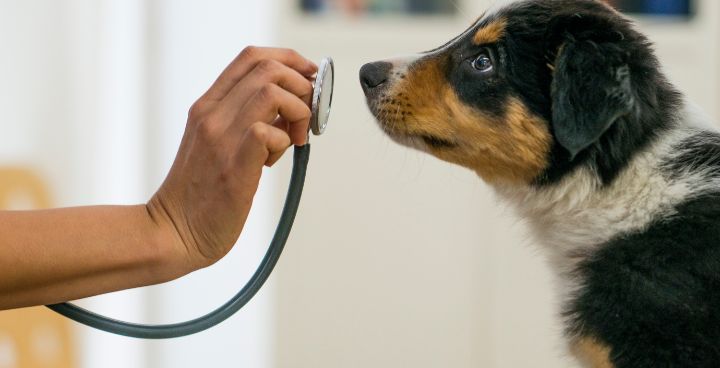
Diagnosis of a food allergy can be challenging because the signs can be similar to those caused by other conditions, including environmental allergies (atopy) and flea allergies.
Your vet will usually start by taking a detailed history and examining your dog before recommending tests to investigate other possible causes.
Depending on your dog's signs, these may include:
A thorough physical examination
Skin scrapes, hair plucks or other skin tests to look for parasites
Skin cytology or swabs to check for bacterial or yeast infections
Blood and urine tests if an underlying health problem is suspected
Stool tests if digestive signs need further investigation
Imaging, such as X-rays or an ultrasound, if another underlying problem is suspected
Elimination diet trial
The most reliable way to diagnose a food allergy is with an elimination diet trial followed by a dietary challenge.
Your vet may recommend a hydrolysed or selected novel-protein diet for a set period. This is usually 8–12 weeks for dogs with skin signs.
Your dog must eat only the recommended diet during the trial. Treats, chews and other foods must be avoided.
If your dog's signs improve, your vet may recommend reintroducing their previous diet or individual ingredients. If the signs return, this helps confirm a food allergy.
If your dog only improves partially, they may have a food allergy alongside another condition, such as an environmental or flea allergy.
For more information, see our guide to elimination diet trials in dogs.
Vet treatment for food allergies in dogs
Food allergies can be complex, particularly if your dog has severe itching, skin infections or another type of allergy at the same time. Treatment may involve a combination of approaches to control your dog's symptoms and manage any related problems.
Your vet may recommend:
A suitable diet: Once a food allergy has been confirmed, avoiding the ingredients that trigger your dog's symptoms is the main treatment. Your vet can advise on a suitable long-term diet.
Anti-itch medication: may be prescribed to control severe itching or flare-ups while the underlying problem is being managed.
Parasite control: appropriate treatment may be recommended if parasites are part of your dog's skin problems.
Treatment for other allergies: if your dog also has an environmental or flea allergy, your vet may recommend additional treatment to control these triggers.
Once a food allergy is confirmed and the trigger is avoided, many dogs can be managed successfully with an appropriate diet. Some dogs may still need medication to control flare-ups or treat secondary skin or ear infections.
If your dog's symptoms are severe, difficult to control or do not respond to treatment, your vet may refer you to a veterinary dermatologist for further investigation and management.
How to look after a dog with food allergies at home
Once a food allergy has been diagnosed, the most important part of managing it at home is avoiding the ingredients that trigger your dog's symptoms.
Diet
Feed a complete and balanced diet: Your vet can recommend a suitable long-term diet that avoids your dog's known food triggers. This may be a hydrolysed-protein diet or an appropriate novel-protein diet.
Be careful with treats and extras: Check treats, chews, supplements and flavoured medications with your vet, as they may contain ingredients that could trigger your dog's symptoms.
Home-prepared diets: These can sometimes be used, but should be formulated with advice from a veterinary nutritionist to make sure they provide all the nutrients your dog needs.
Skin and ears
Ear cleaners: Some dogs may benefit from regular ear cleaning, but the appropriate product and frequency will depend on your dog's individual needs. Over-cleaning can irritate the ears.
Skin products: Your vet may recommend medicated shampoos, mousses or other topical treatments to help manage irritated skin or secondary infections.
Skin supplements: Supplements containing omega-3 fatty acids may be recommended to support skin health.
Digestive signs
If your dog has ongoing soft stools, diarrhoea or other digestive problems, speak to your vet. They may recommend dietary changes or other treatment. Probiotics may be appropriate for some dogs.
Speak to your vet before introducing new supplements, ear cleaners or other treatments, as these may not be appropriate for every dog.
Our Joii vets are available 24 hours a day for advice.
Tips on how to prevent food allergies in dogs
Unfortunately, there is no currently proven way to prevent food allergies developing in dogs.
If your dog develops persistent itchy skin, recurrent ear problems, or digestive issues, speak to a vet as soon as possible to investigate and treat the underlying problem.
When you should be worried about food allergies in dogs
Speak to a vet if your dog develops signs that could be caused by a food allergy.
Seek urgent veterinary care if:
Your dog has severe or repeated vomiting or diarrhoea, particularly if there is blood.
Your dog is very lethargic, weak or unresponsive.
Your dog is persistently or severely itchy, particularly if they are causing damage to their skin.
Your dog is losing weight or has a reduced appetite.
Your dog has signs of a skin or gastrointestinal problem that are not improving.
Speak to a Joii vet if:
You think your dog may have a food allergy and would like advice on the next steps.
You would like advice about starting an elimination diet trial.
Your dog has mild itching, ear problems or gastrointestinal signs and is otherwise well.
You have questions about your dog's diet or nutritional needs.


