Mental Enrichment Ideas for Your Dog


What Is Mental Enrichment for Dogs?
Easy Mental Enrichment Ideas for Dogs Using Their Food
Use Enrichment to Encourage the Behaviours You Want to See
Why Sleep Is Just as Important as Play for Dogs
When Should I Speak to a Vet About My Dog's Behaviour?
Making Mental Enrichment Part of Your Dog's Daily Routine
Products in this article
Mental enrichment is just as important as physical exercise to keep your dog happy, healthy and fulfilled. It keeps their brain active, provides opportunities for using natural instincts, reduces boredom and encourages calm behaviour.
It can be particularly helpful for dogs that cannot go on regular walks due to health problems, behavioural concerns or lifestyle restrictions. It’s also helpful for dogs who need extra support with anxiety, reactivity or settling at home.
The good news is that, with a little creativity, mental enrichment is easier to achieve than you might think. In this guide, we'll explore simple mental enrichment ideas for dogs, and how to turn everyday activities into fun and rewarding experiences.
What Is Mental Enrichment for Dogs?
Mental enrichment involves providing activities to encourage natural behaviours that your dog enjoys such as exploring, sniffing, chewing and exploring.
Mental enrichment isn't about keeping your dog busy every minute of the day. It's about providing appropriate activities that meet their needs while still allowing plenty of time for relaxation and sleep.
Why Is Mental Stimulation Important for Dogs?
Mental stimulation can help to:
Provide an outlet for natural behaviours, such as sniffing, searching and chewing
Increase positive neurotransmitters in the brain such as serotonin
Burn energy and reduce boredom
Encourage learning new skills and make good choices
Support relaxation and calm behaviour
Reinforce desirable behaviour such as settling calmly on a bed
Reduce negative emotions such as anxiety and frustration and unwanted behaviours
Activities such as scentwork, food puzzles, training games and chewing all provide mental stimulation. Every dog is different, so it's important to choose activities and toys that suit your dog's age, health and personality so they can play safely.

Easy Mental Enrichment Ideas for Dogs Using Their Food
One of the easiest ways to introduce mental enrichment is to change how you feed your dog. Instead of feeding all their food at mealtimes, try using some of their normal daily food for activities that encourage sniffing, searching and problem-solving.
1. Try Scatter Feeding
Scatter feeding is a simple way to encourage your dog to use their nose. Scatter some of their dry food across a clean floor or a suitable area of the garden. Let them sniff around and search for each piece.
Start with a small area where the food is easy to find, then gradually make the game more challenging if your dog enjoys it.
2. Hide Food Around the Garden
Turn your garden into a treasure hunt by hiding small portions of your dog's normal food in safe, accessible places. Begin with simple hiding places and increase the difficulty gradually, avoiding anything hazardous. If your dog cannot access a garden, you can play the same game indoors.
3. Create a Cardboard Box Search Game
Place some of your dog's dry food inside a clean cardboard box and add loosely crumpled paper packaging for them to investigate. Your dog can sniff, search and move the packaging to find their food.
If they find this challenging, you can start with an empty box, then gradually add more paper and make it more challenging as they learn.
Remember to supervise your dog, remove staples or other potentially hazardous materials, and stop if your dog starts swallowing cardboard rather than investigating it.
4. Use Food-Stuffed Kongs
Food-stuffed Kongs are a popular enrichment option because they encourage dogs to work for their food.
Fill a suitable Kong with some of your dog's usual wet food or other ingredients that they tolerate, such as chicken. For an activity that lasts longer, try freezing the filled toy before offering it. Food-stuffed Kongs are also useful when you want to encourage your dog to relax in a comfortable area, such as their bed or crate.
Choose an appropriate size and strength of Kong. There are many options, from puppy versions to high-strength versions for strong chewers. Supervise your dog initially and replace the Kong if it becomes damaged.
5. Offer Lick Mats
Licking can be a soothing activity that encourages calm emotions. Spread a thin layer of your dog's usual wet food across a suitable lick mat. You can also use other dog-safe food, such as liver paste, if they will tolerate it.
Use the mat under supervision, especially if your dog tends to chew or destroy enrichment equipment, and remove it if it becomes damaged.
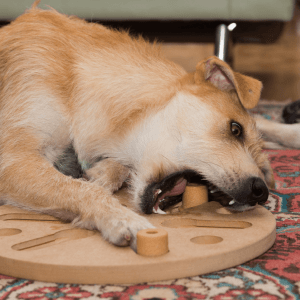
6. Introduce Puzzle Toys and Buster Cubes
Puzzle toys encourage dogs to work out how to access their food. Options range from simple food-dispensing toys to more complex puzzles that require different movements or problem-solving skills.
Start with an easy puzzle so your dog can experience success. If an activity is too difficult, your dog may become frustrated and lose interest. Rotate different toys to keep things interesting, and choose designs that are safe and suitable for your dog's age and personality.
Use Enrichment to Encourage the Behaviours You Want to See
You can also use mental enrichment to reinforce behaviours you would like your dog to repeat. Think about what you want your dog to learn and how you can make that behaviour rewarding.
Encourage Your Dog to Settle
If you want your dog to spend more time relaxing on their bed or in a certain area, make that area a positive place to be.
Offer a suitable food-stuffed Kong or lick mat while your dog is resting on their bed, in a crate, pen or wherever you wish them to settle. This can help create a positive association with the area and encourage them to spend time there.
Reward Calm Behaviour
Look out for moments when your dog chooses to relax, lie down or settle quietly. You can gently reward these behaviours with praise, a small treat or an appropriate enrichment activity.
Over time, consistently rewarding desirable behaviours can help your dog learn which activities are worthwhile.
Why Sleep Is Just as Important as Play for Dogs
It’s easy to focus on exercise and activities and forget about the importance of rest. However, sleep and relaxation are essential parts of your dog's wellbeing and have a big impact on behaviour. Adult dogs need around 12–14 hours of sleep in a 24-hour period, while puppies and older dogs need up to 18 hours.
Sleep helps dogs cope better, decompress and feel calmer. If your dog is overtired or overstimulated, they may find it harder to regulate their emotions and be more likely to feel anxious and react with unwanted behaviours such as aggression and reactivity.
Create a Quiet, Comfortable Resting Area
Make sure your dog has access to a cosy place where they can rest without being disturbed.
This could be a comfortable bed in a quiet room or another area where your dog feels safe and is undisturbed. Teach children and visitors to leave your dog alone when they are resting.

Avoid Overstimulating Your Dog
More activity isn't always better. Too many exciting games and mental stimulation can lead to overstimulation. Keep enrichment activities short and sweet, especially for puppies. Balance active enrichment, such as puzzle games and training, with calmer activities such as chewing and resting. Watch your dog's body language closely. If they show signs of becoming stressed, frustrated, overexcited or tired, stop and give them a break.
Can Mental Enrichment Help Dogs With Anxiety and Reactivity?
Enrichment can support dogs who experience anxiety or reactivity by helping them to de-stress and promote calmer emotions.
For example, a dog who finds walks overwhelming may benefit from gentle scentwork and food-searching games at home. A dog who struggles when left alone can benefit from enriching activities such as food-stuffed Kongs on their bed to encourage settling away from their owner.
However, it’s important to note enrichment alone will not resolve behavioural problems. If your dog is struggling with behaviour issues such as reactivity or struggling when left alone, they likely need a tailored behaviour plan from a qualified behaviourist.
When Should I Speak to a Vet About My Dog's Behaviour?
Mental enrichment can be a helpful part of supporting your dog's wellbeing, but changes in behaviour can be linked to an underlying medical problem.
Behaviour issues are very common. If your dog shows signs of aggression or reactivity, struggles when left alone, noise fears, excessive barking, toileting issues, anxiety, or other unwanted behaviours, your first step should be to speak to a vet.
Pain and other medical conditions can contribute to changes in behaviour, so it's important to rule these out first.
Getting Help From a Qualified Behaviourist
If your vet rules out relevant medical causes, they may recommend referral to a suitably qualified behaviourist for further assessment and support. Qualified behaviourists can also be found on the ABTC and FAB registers.
A behaviourist can help you understand what is triggering your dog's behaviour and develop a tailored plan. This may include management strategies and training methods.
Our online Joii team is available for vet and behaviour advice. They can refer you to a qualified behaviourist if needed.
Making Mental Enrichment Part of Your Dog's Daily Routine
Mental enrichment doesn't need to be complicated or expensive. Start with simple activities, such as scatter feeding or offering a suitable food-stuffed Kong. Then build up to more challenging activities and puzzle toys. Remember to balance stimulation with rest to help your dog enjoy a more rewarding and content life.


Last updated